In the third quarter of 2026, we secured an order from a U.S. toy company. The client specializes in dinosaur-themed plush pillows; having previously sold exclusively online, they were now looking to expand into brick-and-mortar supermarkets—a move that required a batch of cardboard “dump bins” for their retail displays.
To put it plainly, they needed these displays to serve as their “offline storefront.” As an online-first brand venturing into physical retail for the first time, they had to rethink everything: how to arrange the products, how customers would interact with and retrieve them, and how to ensure the brand would catch the eye at a single glance. The client understood this well; they sent over a reference image, specifying that they wanted a dump bin with a distinct, high-end design—nothing too generic.
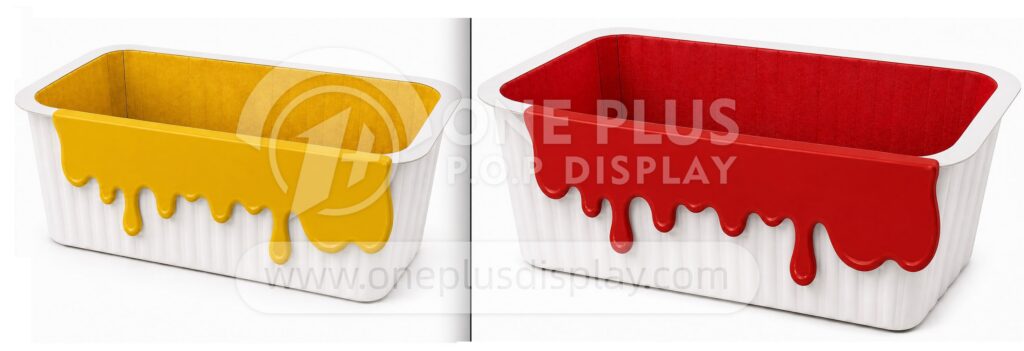
(Reference image provided by the client)
The requirements are actually quite complex
As we delved into the details, it became clear that what initially looked like a simple cardboard bin actually involved a host of considerations.
First, the products themselves posed a challenge: the dinosaur-themed plush pillows come in all sorts of irregular shapes—flat, round, large, and small—making them impossible to display on standard shelving. We had to custom-design a bin specifically tailored to this collection. Second, the client had a very specific vision for the design: the four bottom corners needed to be rounded, and the front required a 3D effect—resembling a “dripping water droplet.” And finally, the most critical point: this is an online-first brand venturing into the physical retail space for the first time. The visual appeal and eye-catching potential of the display stand will directly determine how steady their first step into the offline market proves to be.
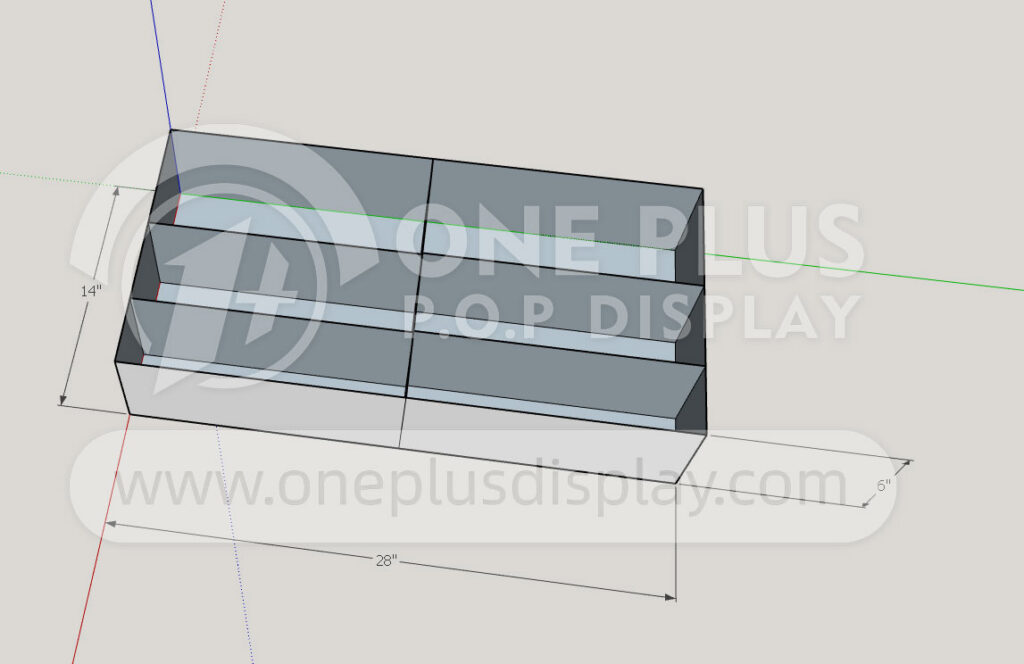
(We immediately created 3D renderings.)
Therefore, the exterior design is the top priority for this project; everything else must take a back seat.
Getting the Dimensions Right—Even Without a Sample
The trickiest part of this project was that we didn’t have an actual product sample. The client only provided the dimensions for the dinosaur-shaped plush pillow. Given its irregular shape, determining the ideal width and depth for the display stand required some educated guesswork.
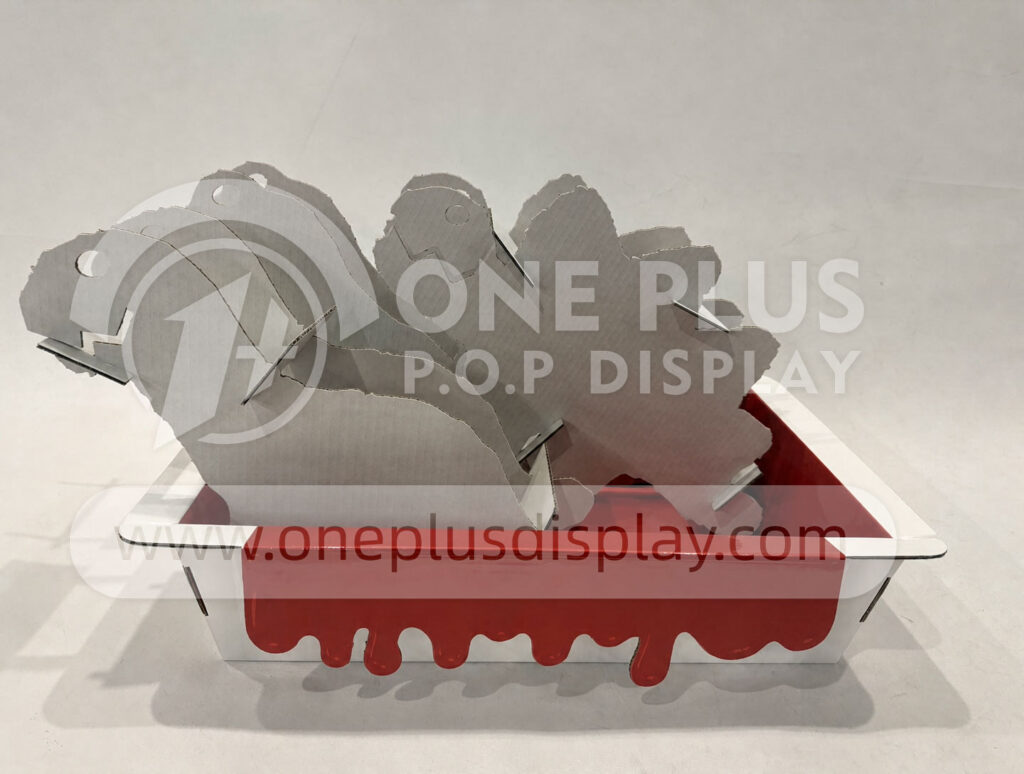
(In the absence of a physical sample, we created a paper mock-up to visualize the placement. Note: Any logos in the images have been obscured; please contact us if you would like to see the original, unedited versions.)
Ideally, the client wanted rounded corners at the base—but this is physically impossible with corrugated cardboard, as the material cannot be creased into a smooth curve at the base fold. After discussing this with the client, we proposed a compromise: keeping the rounded corners on the upper frame while using straight, right-angled corners for the base. Such adjustments are quite common; since cardboard displays have inherent material limitations, it’s crucial to be transparent with the client about what is feasible—otherwise, you risk producing a structure that cracks the moment it’s folded.
The “3D water-drip” effect on the front also required some extra thought. The client wanted a raised, dripping-water design along the front edge—not just a flat, printed graphic. To achieve this, we integrated the top cover with the front panel and reinforced the middle with extra layers of corrugated cardboard. This gave the edge both thickness and a three-dimensional, sturdy appearance. Once the sample was ready, we photographed it and sent the images to the client, who gave us the green light.
There was one other detail we nearly overlooked: the top section was attached to the main body using double-sided tape—a connection point prone to peeling or lifting over time. We opted for a high-strength industrial adhesive and left the assembled unit in the factory for a full week to ensure the edges remained perfectly secure. Only after confirming there was no sign of peeling did we take the final photos for the client. This is the kind of detail the client might not think to ask about, but if it were neglected, it could lead to a major issue later on.
Final Result
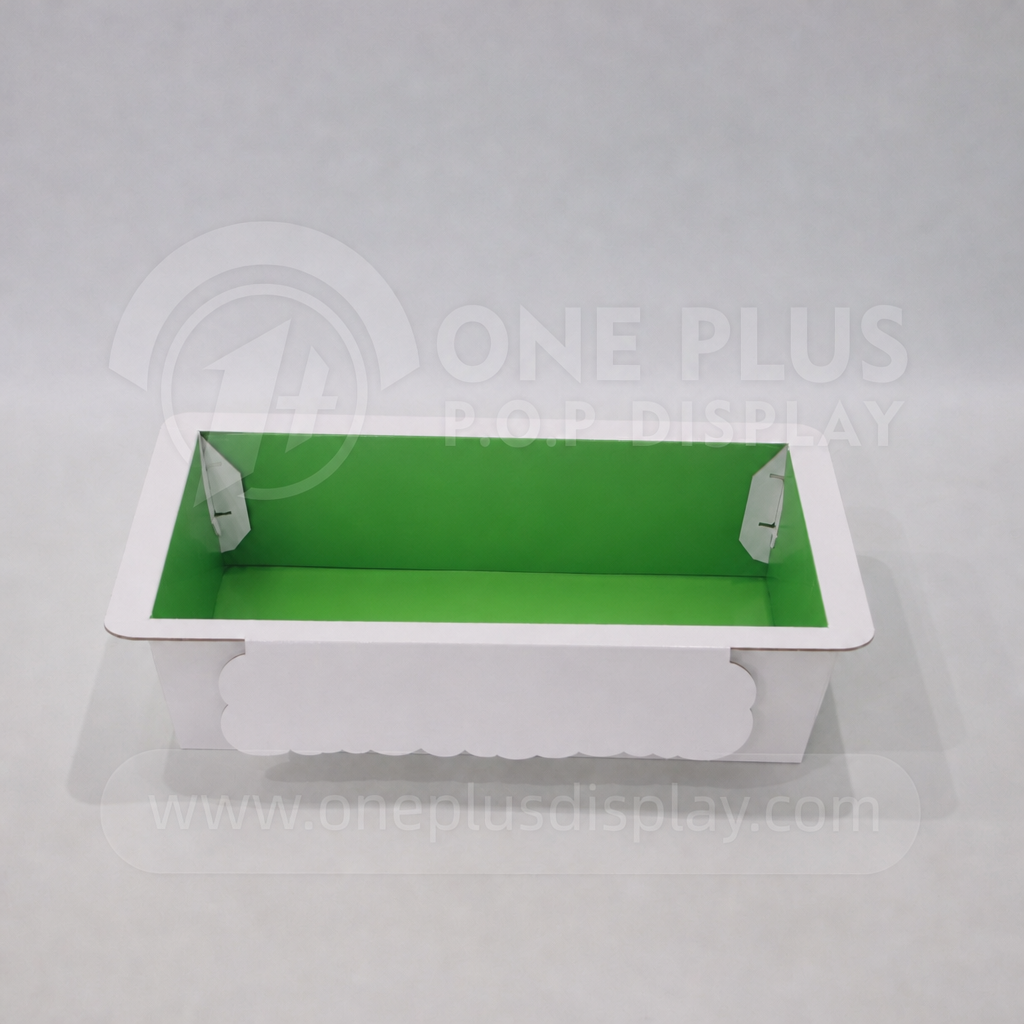
(Green-colored prototype; please note: any logos in the images have been obscured. Contact us if you would like to see the original, unedited version.)
The finished product is a trapezoidal bin—wider at the top and narrower at the bottom—with an open top and no lid. This allows customers to easily reach in and grab a dinosaur without having to dig around. Such an open display style is particularly effective for toys aimed at younger children, as it encourages them to pick up the items the moment they see them.
The front features an upright panel (header/front-facing board) printed with the client’s prominent logo, making the product easily identifiable from a distance. The bottom edge of this panel is die-cut into a wavy, organic shape; these soft, flowing lines complement the “dinosaur jungle” theme, making the display far more engaging than a standard, boxy cardboard container.
Constructed from 350g grey-back cardstock laminated onto W5 B-flute corrugated cardboard, the unit is lightweight yet structurally robust. The displays are shipped flat—packed 25 units per carton—with each individual unit wrapped in stretch film and labeled with a barcode. This ensures seamless scanning and inventory processing upon arrival at the U.S. warehouse. Shipping them flat significantly reduces volume, which in turn lowers freight costs.
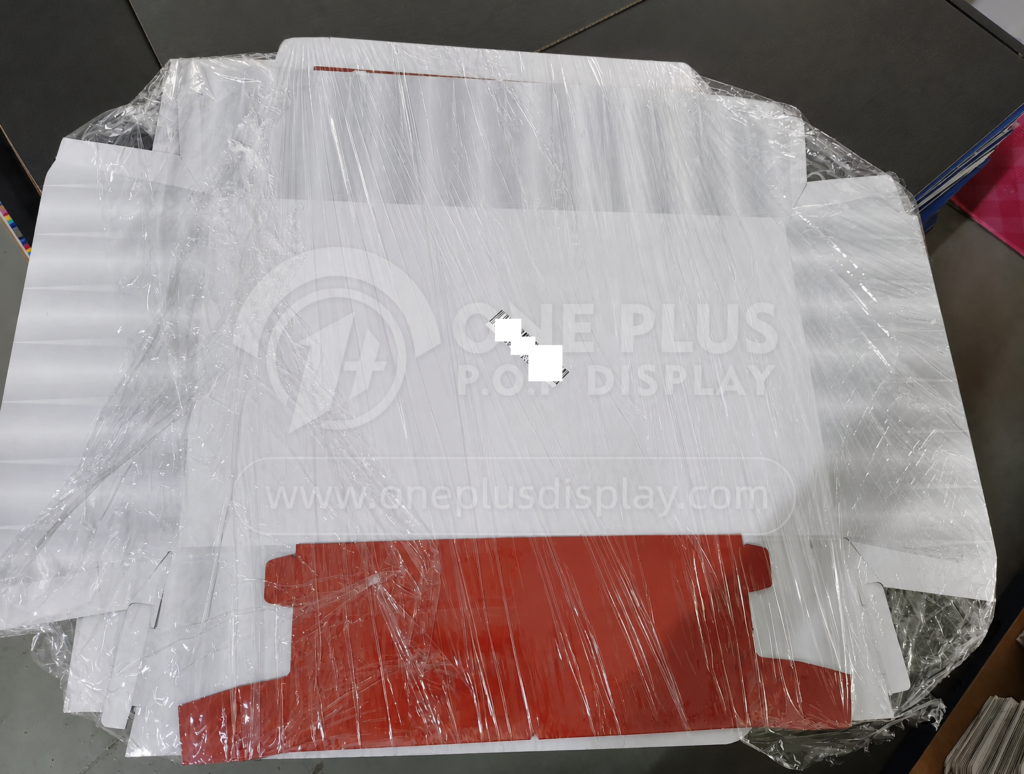
(Each unit is individually wrapped in stretch film and affixed with a barcode.)
The final dimensions are: 540mm wide at the top, 500mm wide at the bottom; 330mm deep at the top, 290mm deep at the bottom; and 130mm in total height. The order consisted of 50 units each for two different designs—100 units in total—which were completed and delivered within 12 days.
Prototyping is a step you cannot skip
We went through several rounds of prototyping and dimension adjustments. Since there was no physical product available, we cut cardboard models to the exact size of the cushions and placed them inside the container to check if there was sufficient space and whether they could be easily retrieved. We refined the dielines and sent them to the client for approval; it took several back-and-forth iterations to finalize the design.
Many clients view prototyping as a waste of time, but the reality is quite the opposite—especially for projects involving irregularly shaped products where no sample exists. Any time “saved” by skipping the prototyping phase will inevitably be paid back twofold during mass production.
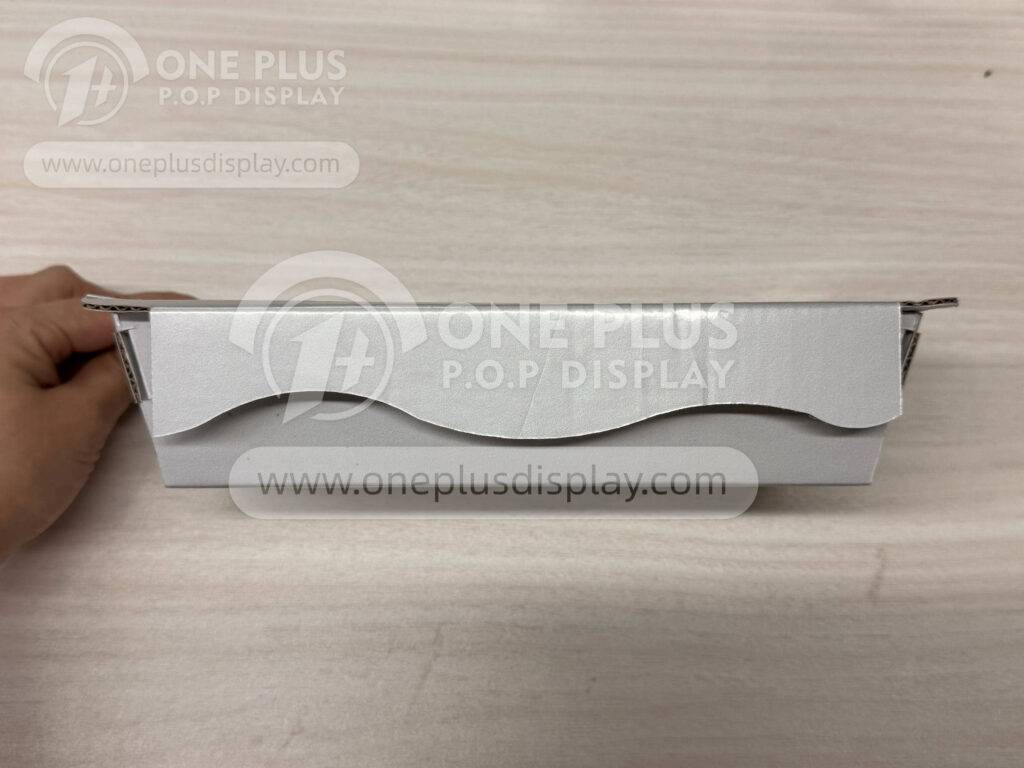
(Small-scale unprinted prototype)
Delivery and Follow-up
The client’s feedback was simple: “You’re very efficient.” It was a brief remark, but coming from a U.S. client we were working with for the first time, it counts as a positive endorsement.
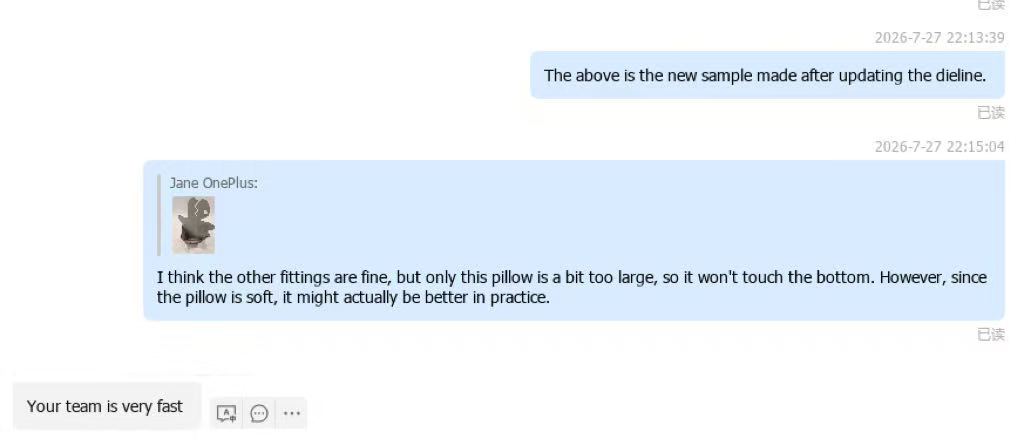
(Authentic client feedback)
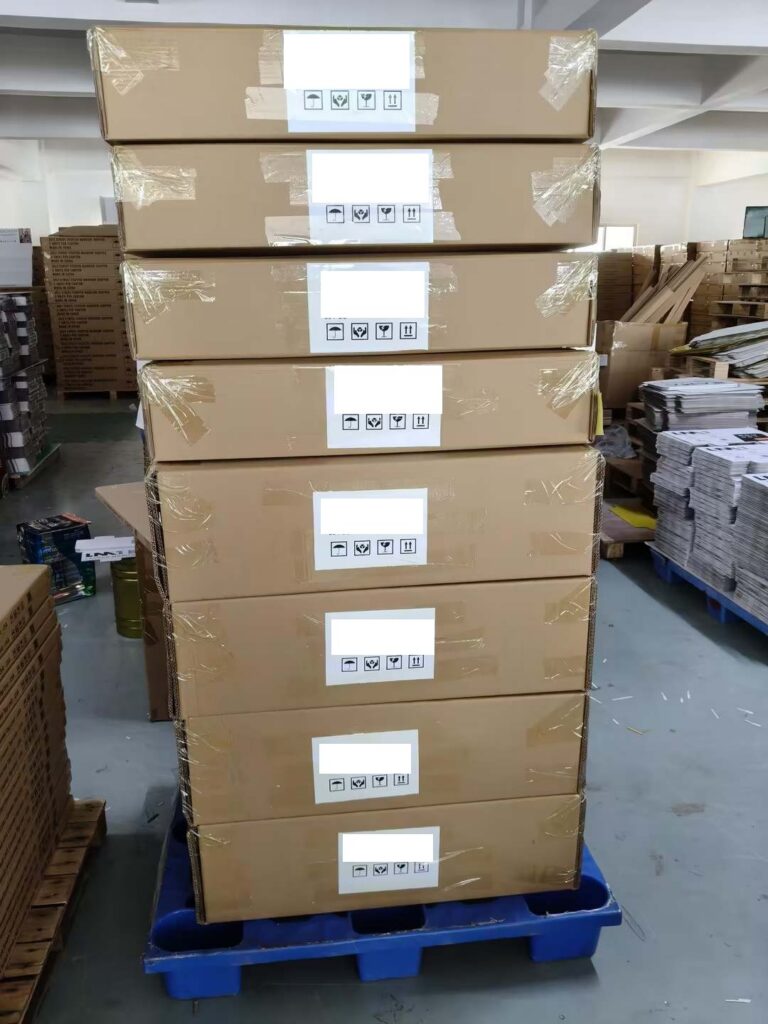
(Photos of the shipment)
While this project—a run of 100 units—wasn’t particularly large, it highlights a few key points: First, when it comes to structural design, you have to be willing to “negotiate” with the client—clarifying what is feasible and what isn’t early on is far better than addressing it later. Second, details like custom-shaped edges or three-dimensional forms aren’t just a matter of printing a design; they require careful structural thinking. Finally, even for small-batch export orders, you must get the logistics details—packaging, barcodes, and stretch-wrapping—exactly right. Otherwise, if the goods arrive at the warehouse and can’t be processed into inventory, the client will be coming back to you with a problem.
ONE PLUS DISPLAY specializes in custom-made paper, acrylic, and PVC display stands, offering a comprehensive, end-to-end service—from initial design to final delivery. Whether you are an online-only brand looking to venture into physical retail for the first time, or an established retailer seeking a fresh approach to product presentation, simply bring us your products. We will help you determine the most cost-effective strategy for how to arrange, manufacture, and ship your displays.