Square Cardboard Totem Displays for Shoe Retail
A shopper walks into a running store, glances down a long aisle of footwear boxes, and within two seconds her eyes land on a four-sided column standing at the end of the row. One face shows a trail shoe mid-stride, another highlights the new colorway, a third carries the brand’s logo, and the fourth invites her to scan a QR code for a fit guide. She walks toward it. That moment—turning a passive aisle into a destination—is what a well-designed square cardboard totem is built to do.
Shoes are a visual product. Unlike a box of cereal, footwear sells on silhouette, material, and motion. A totem gives you a freestanding, 360-degree canvas that can hold a hero shoe at eye level, tell a story on all four panels, and still fold flat for economical shipping. For brand managers running seasonal launches across dozens of doors, that combination of presence and practicality is hard to beat.
This page covers how square column totems are engineered for shoe retail, what materials and finishes work best, how to plan placement, and what to expect from a factory-direct production run.

Why a Square Totem Wins for Shoe Merchandising
Most shoe retail floor space is linear: shelves, walls, and gondolas. A totem breaks that geometry. Because it stands on its own footprint, it can be placed at aisle ends, near fitting rooms, in entry vestibules, or beside a checkout counter without being anchored to a wall. That flexibility matters when a campaign needs to appear in stores with wildly different layouts.
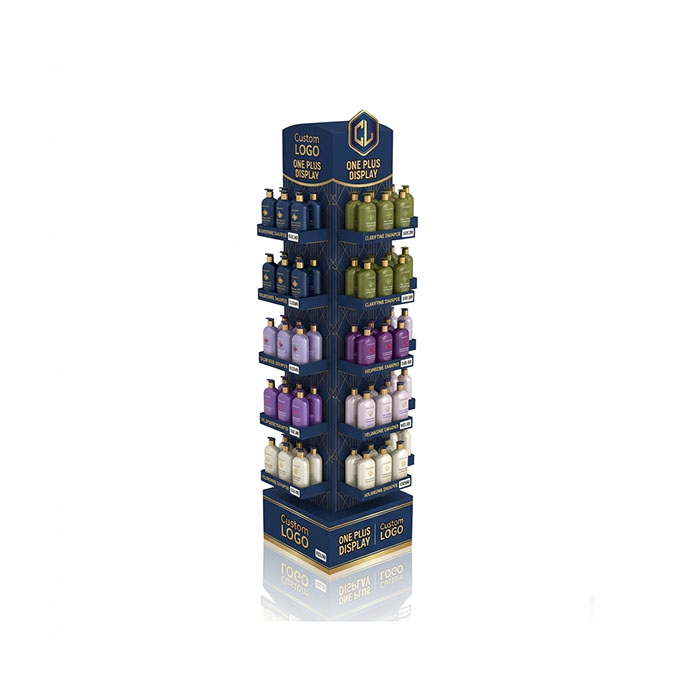
The square column format offers four distinct faces. You can repeat the same graphic on all sides for pure brand reinforcement, or assign each face a different role: product hero, technology story, size or fit information, and a call to action. For a shoe launch, this lets one unit do the work of several posters while occupying a fraction of the floor area.
Height is another advantage. A totem typically stands between roughly 1.2 and 1.8 meters tall, which puts the primary visual at or near eye level for a standing adult. Shoppers do not have to look down at a shelf or up at a wall graphic. The message meets them where they are.
Finally, there is the cost-of-entry question. A comparable metal or acrylic floor stand involves tooling, welding, and heavy freight. A corrugated totem is produced with print and die-cutting, ships flat, and can be updated each season without scrapping a durable fixture. For brands that refresh creative frequently, that is a meaningful operational difference.
Structural and Engineering Decisions
Behind a simple-looking column is a set of choices that determine whether it stands straight for a full quarter or sags after a week. The most common construction for a pop-up square totem uses an internal elastic band system. The panels are joined in a way that allows the unit to collapse into a flat stack and then spring into its three-dimensional square shape when removed from the envelope. This is often called flash assembly, and it eliminates the need for tools, tape, or instructions.
For heavier or taller units, we may recommend a different approach. A rigid square column built from laminated corrugated panels, sometimes with an internal support frame, offers greater resistance to leaning and can accommodate heavier die-cut pockets or shelves. The trade-off is that it ships as a flat but semi-rigid pack rather than a fully collapsing pop-up.
Stability is addressed through geometry and ballast. The square footprint is inherently more resistant to tipping than a flat panel, but high-traffic locations—doorways, aisle intersections, near escalators—benefit from additional measures. A weighted base insert, a slightly wider bottom section, or a double-wall lower panel can all improve stability without changing the visible graphics. If you know the totem will sit in a windy vestibule or a busy trade show hall, tell us during quoting so the base can be engineered accordingly.
Die-cutting is another engineering lever. Pockets for brochures, hang tabs for a single display shoe, or a shaped top edge can all be integrated into the die line. These features require careful placement so they do not compromise the structural integrity of the column. We typically prototype any complex die-cut before committing to a full production run.
Materials and Finishing Options
Material selection starts with the print substrate. For high-quality photographic graphics, a common build pairs a 350g CCNB (coated clay news back) facing with a white corrugated core. The CCNB provides a smooth surface for CMYK offset printing, while the corrugated layer supplies rigidity and thickness. This combination is lightweight, cost-effective, and well-suited to four-color process work.
When additional durability or moisture resistance is needed, we can substitute or add a laminated layer. Glossy or matte lamination protects the print from scuffing and handling, which matters for units that will be assembled and disassembled repeatedly. Matte lamination tends to reduce glare under store lighting, while gloss lamination can make colors appear more saturated. Both are available.
For premium executions, PVC foam board and acrylic are alternatives to corrugated. PVC foam board offers a stiffer, smoother surface and can be routed or die-cut into more intricate shapes. Acrylic provides a high-end, glass-like appearance and is often used for smaller countertop totems or for display components that need to be wiped clean. These materials increase unit cost and shipping weight, so they are usually reserved for flagship stores, trade show booths, or permanent retail environments.
Structural inserts—such as a heavier corrugated base panel or an internal cardboard frame—can be specified without changing the exterior graphics. This is a common way to upgrade stability while keeping the same visual design.
| Component | Typical Options | Notes |
|---|---|---|
| Print substrate | 350g CCNB + white corrugated; PVC foam board; acrylic | Corrugated is standard for pop-up totems; PVC and acrylic for premium builds |
| 인쇄 | 4C CMYK offset; glossy or matte lamination | Offset gives consistent color across large panels |
| 구조 | Square column / rectangular prism; pop-up elastic or rigid laminated | Pop-up for portability; rigid for heavier loads |
| 치수 | Customized. Example footprint: 30cm x 30cm; example height: 160cm | Height and width adjusted to floor plan and ceiling height |
| 조립 | Automatic (elastic pop-up) or manual fold-and-lock | No tools required for pop-up versions |
| 포장 | 개별 봉투 또는 상자에 평면 포장 | Envelope for single units; carton for bulk |
| Minimum order | 200 개. | Applies to custom printed runs |
| Lead time | 10–12 days for bulk production | After artwork approval; shipping time additional |
Merchandising and Retail Placement
Where a totem stands determines what it should say. At an aisle end, the totem often functions as a category signpost—pointing shoppers toward running, basketball, or casual sections. In this position, the graphics should be legible from a distance, with a strong color block or silhouette that reads across the store.
Near a fitting room or try-on area, the totem can shift to a more informational role. One face might show a size conversion chart, another could highlight a specific cushioning technology, and a third could offer a QR code for a digital fit quiz. This is where die-cut pockets for brochures or care cards become useful.
At the checkout queue, the goal changes again. Here the totem works as a last-minute reminder—perhaps promoting a shoe care kit, an insole upgrade, or a loyalty program. Because the unit is freestanding, it can be repositioned as the queue layout changes.
For multi-door campaigns, consistency matters. Standardizing the totem size and assembly method across stores makes it easier for regional managers to plan placement and for store staff to set up without training. If some locations have low ceilings or narrow entryways, a shorter or narrower variant can be produced from the same artwork with minimal changes.
Customization and Production Workflow
Customization begins with a conversation about the campaign: what shoe models are featured, how many stores, what the typical floor plan looks like, and whether the totems will be reused or treated as seasonal. From there, we can propose a size, structure, and material mix that balances visual impact against budget and logistics.
Artwork is prepared for four-panel printing. If the design wraps around corners, we will provide a dieline showing safe areas and fold lines. If each panel is independent, the artwork can be supplied as four separate print-ready files. In either case, a physical or digital proof is reviewed before production.
Production typically involves offset printing on the chosen substrate, lamination if specified, die-cutting, and assembly of the pop-up mechanism or rigid structure. Bulk runs are usually completed in 10–12 days after artwork approval, though this can vary with complexity and order volume. Flat-packed units are then consolidated for shipping.
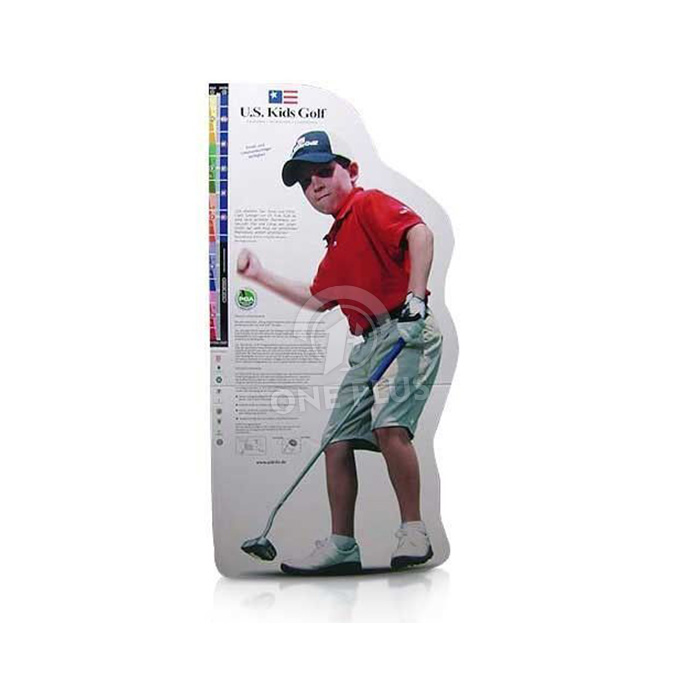
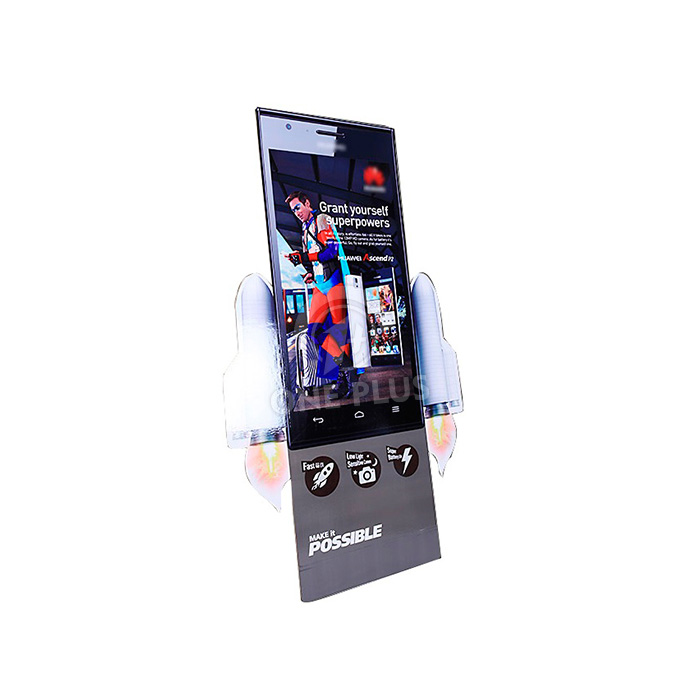
For buyers who need a related format, we also produce free-standing character cutouts and movie-style standees. The engineering principles—stability, print quality, and flat-pack logistics—carry across formats. You can see examples of our standee and totem displays for more context on how different shapes solve different retail problems.
Three Concrete Use-Case Scenarios
1. National Running Shoe Launch
A footwear brand plans a simultaneous launch of a new trail running shoe across 150 specialty running stores. Each store receives a square totem with four faces: a hero shot of the shoe on trail, a close-up of the outsole lug pattern, a brand story panel, and a QR code linking to a local trail map. The totems ship flat in individual envelopes, and store staff assemble them in under a minute. Because the units are lightweight, the brand avoids the freight surcharges associated with metal fixtures.
2. Department Store Athletic Department Refresh
A department store chain wants to modernize its athletic footwear area without a full fixture remodel. They order square totems with a matte lamination to reduce glare under track lighting. Each totem is placed at the end of a gondola run, with graphics that coordinate with overhead signage. The store’s visual team appreciates that the totems can be moved during floor resets and that damaged units can be replaced individually rather than as part of a set.
3. Trade Show Booth for a Shoe Technology Brand
A component supplier—cushioning foam, for example—exhibits at an industry trade show. They use taller square totems with die-cut pockets holding technical data sheets. The four faces explain the technology from different angles: performance data, material composition, sustainability notes, and a partner logo wall. The totems double as booth architecture, defining the space without the cost of custom cabinetry. After the show, they fold flat for storage until the next event.
Assembly, Packing, and Logistics
Pop-up totems are designed for speed. The unit arrives flat in an envelope or carton. The user removes it, holds the top and bottom, and allows the elastic bands to pull the panels into a square column. No tools, no tape, no instructions. For stores that receive frequent fixture changes, this reduces labor hours and the risk of improper assembly.
When it is time to change the campaign, the totem collapses back into its flat state. If the unit is intended for reuse, it can be stored in its original packaging. If it is a one-time promotional piece, it can be recycled according to local corrugated waste guidelines—another advantage over mixed-material fixtures.
Shipping is where the flat-pack design pays off. A 160cm tall totem might fold to a fraction of its assembled size, allowing many units to fit on a single pallet. This lowers freight cost per unit and reduces warehouse space requirements. For nationwide campaigns, those savings compound quickly.
For international orders, we coordinate with freight forwarders and can provide packing lists and carton dimensions for customs planning. Flat-packed corrugated displays are generally classified as printed packaging or advertising material, but we recommend confirming with your customs broker.
Frequently Asked Questions
Can I print different images on each side of the totem?
Yes. Each of the four faces can carry unique artwork. This allows you to showcase different shoe models, present a multi-step brand story, or dedicate one panel to practical information such as sizing or care instructions.
Is the totem stable enough to stand alone in a busy store?
The square structure is inherently stable. For high-traffic areas, we can add a weighted base insert or slightly widen the bottom panel to further reduce tipping risk. If you know the intended location, mention it during quoting so we can recommend the right base configuration.
How small does the totem fold down?
A 160cm tall pop-up totem typically folds to a flat pack of roughly 40cm x 40cm, though exact dimensions depend on the panel thickness and construction. This makes it easy to store and ship in quantity.
What is the minimum order quantity and lead time?
Our minimum order for custom printed totems is 200 pieces. Bulk production usually takes 10–12 days after artwork approval, with shipping time additional. Rush options may be available depending on factory capacity.
Ready to Plan Your Shoe Display Campaign?
If you are sourcing display fixtures for a footwear launch, a retail refresh, or a trade show, a square cardboard totem offers a practical combination of visibility, portability, and cost control. Share your campaign goals, approximate store count, and any floor plan constraints, and we can recommend a structure, size, and material specification. You can also review our lifesize cardboard character cutout for golf retail and our movie promotional standee with die-cut silhouette to see how different formats solve different merchandising challenges. When you are ready, contact One Plus Display for a factory-direct quote.