














Warehouse Club Aisles and the Mid-Autumn Rush
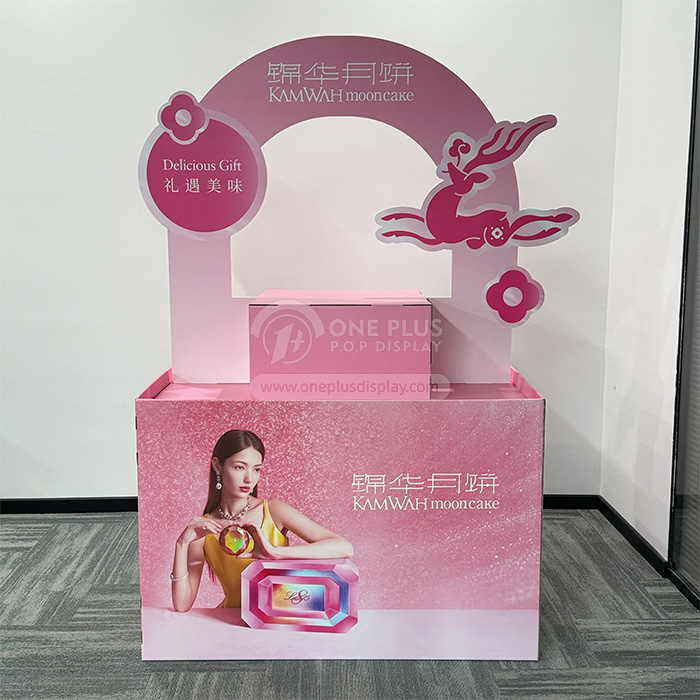
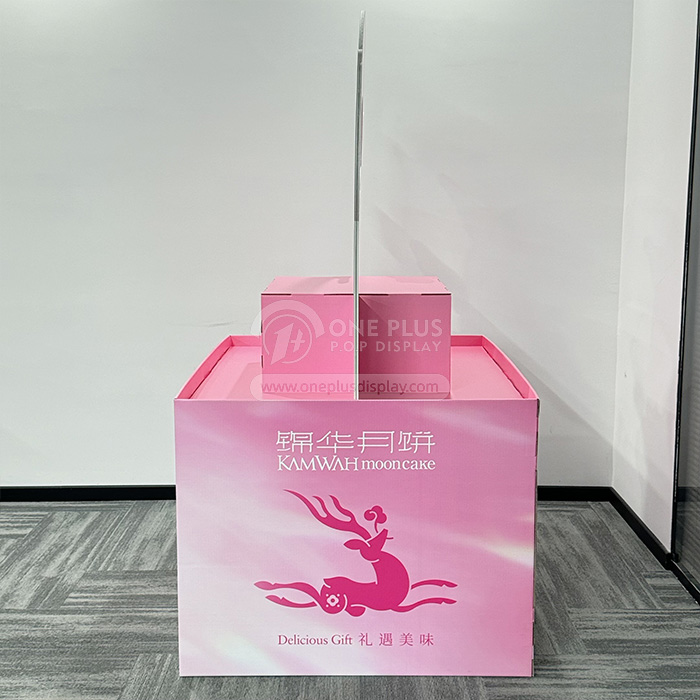
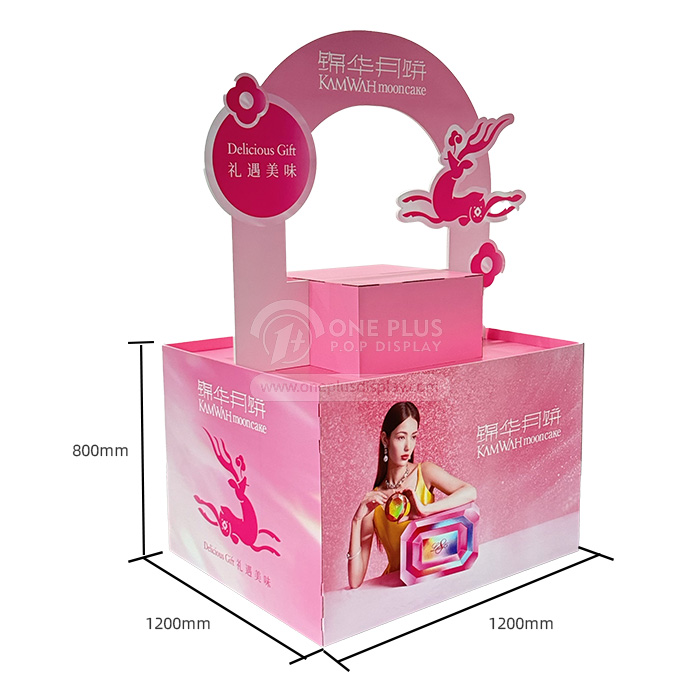
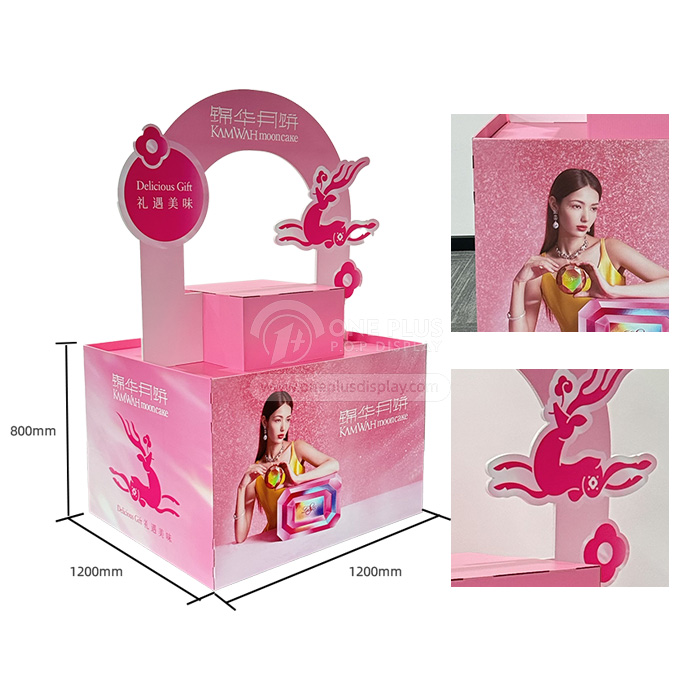
A shopper pushes a flatbed cart past the endcap, pauses at a waist-high bin overflowing with pink gift boxes, and lifts one to read the label. That moment—unplanned, tactile, and quick—is the entire job of a pallet dump bin during Mid-Autumn Festival season. In warehouse club environments, shoppers move fast, decide visually, and expect volume. A well-engineered corrugated dump bin puts mooncakes within arm’s reach, stacks them high enough to signal abundance, and keeps the branding loud enough to survive beside pallets of bulk water and paper towels.
Mid-Autumn Festival is a compressed selling window. Mooncake assortments appear weeks before the holiday and disappear almost overnight. That means the display itself has to arrive ready, assemble in minutes, hold significant weight without sagging, and look premium enough for gift-giving purchases. Pink is not a random choice—it reads as festive, soft, and gift-oriented, which suits mooncake packaging far better than the industrial browns and blues common in warehouse club fixtures.
This page covers how a pink corrugated dump bin is engineered for warehouse club conditions, what materials and finishes work best, how to plan merchandising, and what the customization and production workflow looks like when you work directly with a factory.
Why a Dump Bin Wins in a Costco-Style Environment
Warehouse clubs are not boutiques. Aisles are wide, ceilings are high, and inventory is stacked to the rafters. Displays that work in a grocery aisle—shelf trays, small counter units—disappear in that scale. A dump bin solves three problems at once: it holds bulk product, it creates a visual mass that competes with surrounding pallets, and it allows shoppers to self-serve without staff assistance.
Compared to a standard pallet display with a die-cut header, a dump bin has an open top and angled or straight walls that invite browsing. Shoppers can reach in, pick up a box, and compare without asking for help. For mooncakes, which are often sold in multi-pack gift sets, that hands-on access matters. It also makes restocking simple: staff can drop in new cases without disassembling the unit.
Another advantage is footprint efficiency. A dump bin can be designed to sit on a standard pallet footprint or as a standalone floor unit. In a club environment where every square meter of floor space is planned, a compact but tall bin delivers high product density without blocking sightlines.

Structural and Engineering Decisions
Corrugated dump bins look simple, but the engineering behind them determines whether they survive a busy retail floor. The first decision is wall construction. For heavier mooncake assortments—especially those packed in tins or rigid boxes—double-wall or even triple-wall corrugated is often specified for the base and lower panels. Single-wall can work for lighter loads, but the base must always be reinforced.
The second decision is the base and pallet interface. Many dump bins are designed to sit on a standard wooden pallet, which allows forklift movement and keeps the corrugated structure off the floor. The bin’s bottom panel is typically a separate piece that locks into the side walls, distributing weight across the pallet deck. If the bin is freestanding, a thicker base board or a built-in pallet-style foot assembly is used.
Third is the locking mechanism. Interlocking tabs, tongue-and-groove edges, and internal support inserts prevent the walls from bowing outward when the bin is filled. This is especially important for a dump bin because the open top means there is no lid to hold the walls together. A well-designed bin uses a combination of friction-fit tabs and, where needed, a corrugated or PVC insert that acts as a spine.
Finally, consider the load path. Weight should travel down through the corners and the base, not through unsupported side panels. Angled walls can help direct force downward, but they also reduce internal volume. Straight walls maximize capacity; slightly tapered walls improve stability. The right choice depends on the product’s shape and weight.
Materials and Finishing Options
Corrugated board is the default material for dump bins because it is lightweight, printable, and cost-effective at volume. Standard grades include single-wall (ideal for lighter loads and shorter campaigns), double-wall (the workhorse for retail floor displays), and triple-wall (for heavy or high-density products). The flute type—B-flute, C-flute, E-flute, or a combination—affects both strength and print quality. E-flute offers a smoother surface for detailed graphics, while C-flute provides more cushioning and rigidity.
Printing options range from flexographic printing, which is economical for solid colors and simple logos, to lithographic lamination, which delivers photo-quality graphics. For a pink Mid-Autumn theme, litho lamination can reproduce soft gradients and intricate gold or silver accents that flexo cannot match. Digital printing is another option for short runs or versioned campaigns.
Beyond corrugated, PVC foam board and acrylic can be used for specific components. PVC foam board is a good choice for headers, shelf edges, or reusable structural elements because it resists moisture and holds shape well. Acrylic can be used for small bins, dividers, or premium display accents, though it is heavier and more expensive. A hybrid approach—corrugated body with a PVC foam header—is common when brands want a more durable top section.
Finishing touches include matte or gloss varnish, spot UV, and embossing. These are not just decorative; a matte finish can reduce glare under warehouse lighting, while spot UV can draw the eye to a logo or product name. All these options are customizable based on your artwork and budget.
| Component | Common Material | Why It Works |
|---|---|---|
| Bin body | Double-wall corrugated | Balances strength, weight, and printability for floor display |
| Header | PVC foam board or laminated corrugated | Holds shape, resists bending, accepts rich graphics |
| Base insert | Triple-wall corrugated or MDF | Distributes weight and prevents sagging |
| Dividers | Corrugated or acrylic | Keeps product organized and upright |

Merchandising and Retail Placement
In a warehouse club, placement is everything. A dump bin typically works best in an aisle endcap, a seasonal promotion zone, or near the entrance where shoppers first encounter the holiday theme. Because mooncakes are often purchased as gifts, placing the bin near other giftable items—wine, tea, premium snacks—can increase basket size.
The bin’s height should be set so that product is visible from several meters away. Too low, and it disappears behind carts; too high, and shorter shoppers cannot reach the bottom. A common approach is to design the bin so the top edge sits around waist to chest height for an average adult, with the product stacked above that to create a visual peak.
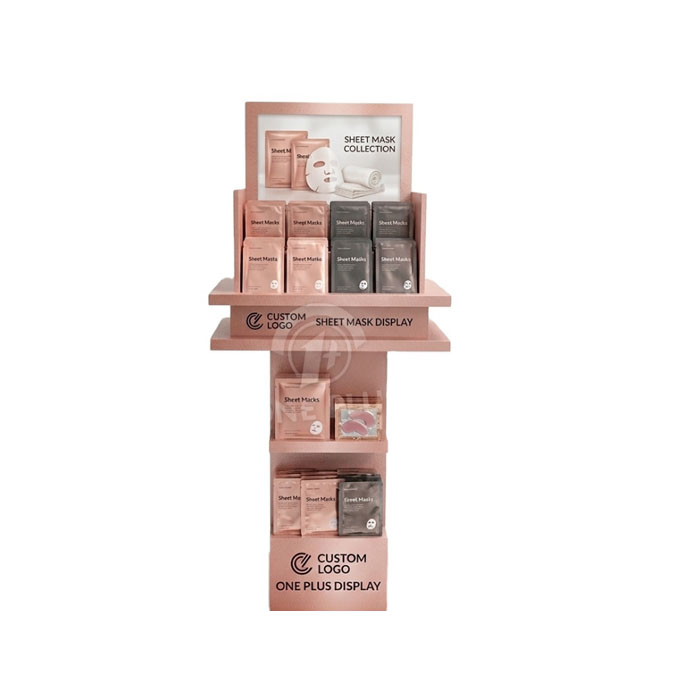
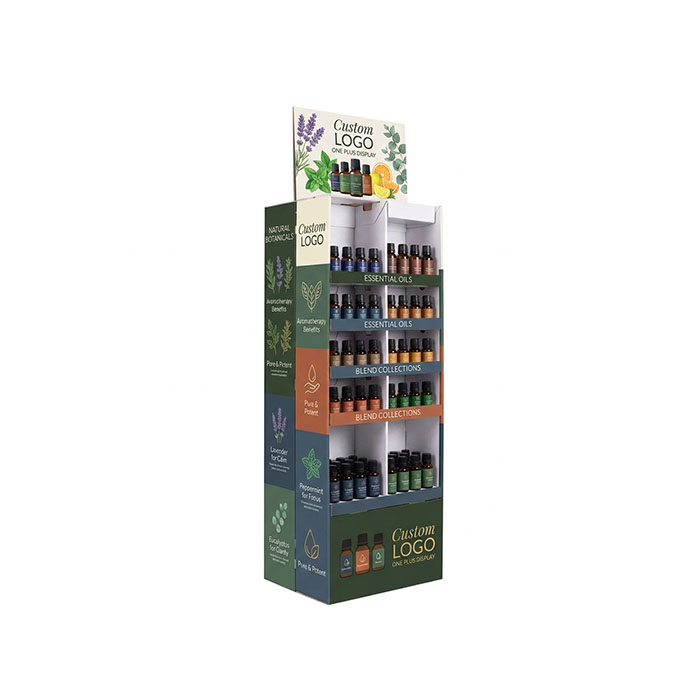
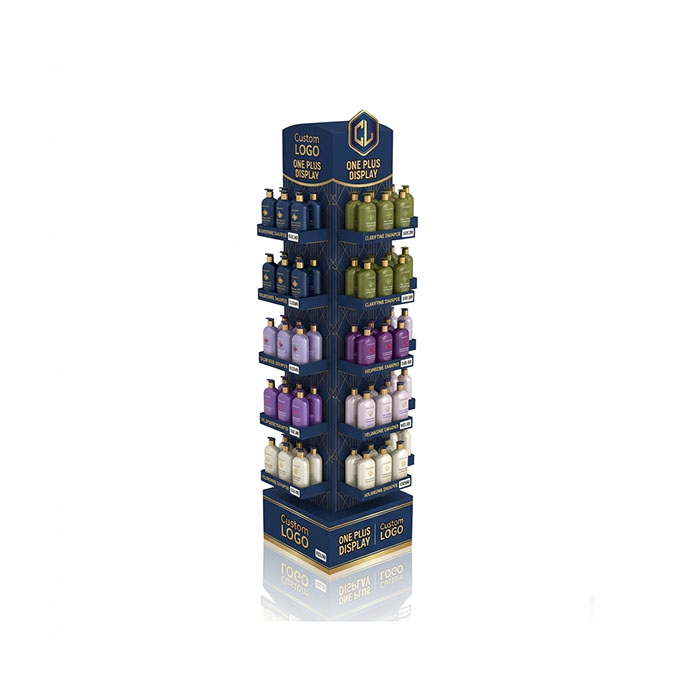
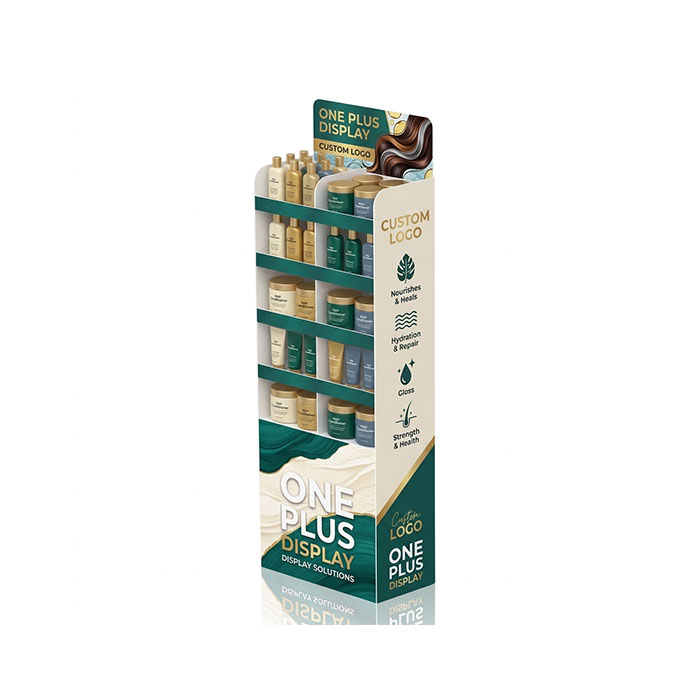
Graphic hierarchy matters. The dominant color—pink—should be visible from a distance. The brand logo and product name should be readable at a glance. Supporting text, such as flavor or origin, can be smaller. If the bin is part of a larger campaign, consider a header that ties into other displays in the store. For inspiration on how headers and platforms can be styled, see this slanted platform pallet display with an irregular header.
Restocking is easier when the bin has a wide opening and no internal obstructions. If dividers are used, they should be removable or adjustable. Staff should be able to drop in a new case without tearing down the display.
Customization and Production Workflow
Every dump bin project starts with a conversation about the product. Mooncake boxes vary widely in size and weight, and the display must be designed around those specifics. The more information you can share upfront—product dimensions, weight per unit, total load, and how the bin will be filled—the faster the engineering team can propose a structure.
If you have reference images or existing artwork, send them. If not, provide the display purpose and product specs, and the design team can create a concept. Once the structure is agreed, a sample is produced, typically within a few days, so you can confirm size, printing, and functionality before committing to bulk production.
For a quote, you will need to provide display dimensions, printing requirements (colors, logos, finishes), weight capacity needs, and order quantity. Production timelines depend on complexity and volume, but the factory is set up for efficient runs and global shipping. If you are also considering other seasonal formats, a house-shaped cardboard display can be adapted for different holiday themes.
Three Concrete Use-Case Scenarios
Scenario 1: Single-Brand Mooncake Gift Set Promotion
A mooncake brand wants to launch a limited-edition pink gift box for Mid-Autumn. The dump bin is designed with a litho-laminated pink exterior and a die-cut header featuring the brand’s logo in gold foil. The bin holds 60–80 gift boxes in a single stack, with a removable divider to separate flavors. It is placed on an endcap near the store entrance for maximum visibility.
Scenario 2: Multi-Brand Assortment for a Warehouse Club
A club retailer wants to offer mooncakes from several suppliers in one display. The dump bin is designed with a neutral pink base and interchangeable header panels, allowing the retailer to swap branding for each supplier. Internal dividers keep each brand’s product separate. The bin is placed in the seasonal aisle alongside other festival items.
Scenario 3: Cross-Merchandising with Tea and Wine
A premium grocer pairs mooncakes with tea and wine as a gift bundle. The dump bin is designed with a dual-compartment interior: one side for mooncakes, the other for tea tins. The exterior graphics show the bundle and suggest pairing. The bin is placed near the wine section, capturing shoppers already in a gifting mindset.
Assembly, Packing and Logistics
Corrugated dump bins are shipped flat to save freight. Assembly typically involves folding the walls, locking the tabs, and inserting the base and any dividers. Most designs require no tools, though some heavy-duty versions may use a few plastic clips or staples for added security. Assembly instructions can be printed on the bin or provided as a separate sheet.
Packing is done in sturdy corrugated cartons, with components bundled and labeled. If the display includes multiple parts—headers, dividers, base inserts—they are packed together in sequence to simplify unpacking at the destination. For large orders, palletizing the flat-packed cartons is standard.
Shipping options include express (3–7 business days), air freight (10–20 business days), and sea freight (25–45 business days). The right choice depends on your deadline and budget. For time-sensitive holiday promotions, express or air freight is often used to ensure the display arrives before the selling window opens.
Frequently Asked Questions
Are you a factory or a trading company?
We are a professional POP display factory established in 2009. You are welcome to visit our facility.
Do you have a product catalog?
Yes. Please share your specific needs, and we will send you the relevant catalog.
How does the design process work?
Our experienced team specializes in cardboard display design and will create cost-effective solutions tailored to you. If you have no design ideas, tell us your requirements—such as display purpose and product specs—and we will design it for you. If you have a reference image, send it along with your product details, and we will develop the design. If you have ready design files, send them directly, and our engineers will optimize them for production.
What information is needed for a quote?
To provide an accurate price, please share display dimensions, printing requirements (colors, logos, finishes), weight capacity needs, and order quantity.
Plan Your Mid-Autumn Display Early
Mid-Autumn Festival sales are won or lost in a few short weeks. A custom pink corrugated dump bin designed for warehouse club conditions can help your mooncakes stand out, stay stocked, and sell through. Because every project starts with the product, the best time to start is now.
Share your mooncake box dimensions, weight, and branding artwork, and the team will propose a structure, produce a sample, and map out production and shipping timelines. Factory-direct production and flat-packed shipping keep costs predictable and delivery reliable. Visit the pallet displays page to see more formats, or send your requirements to get a quote started.