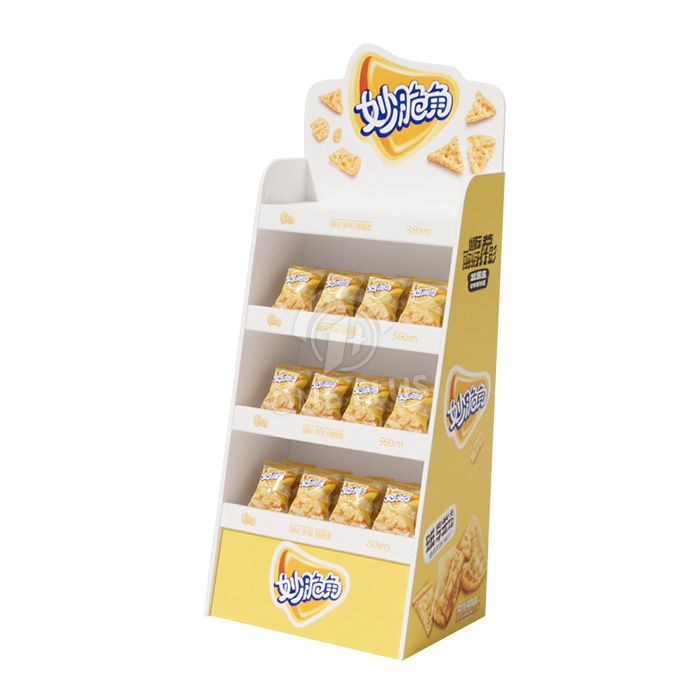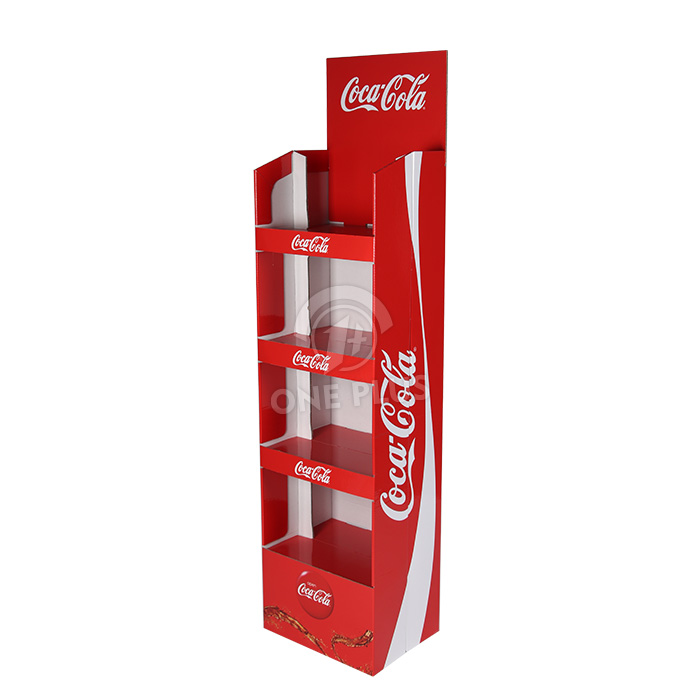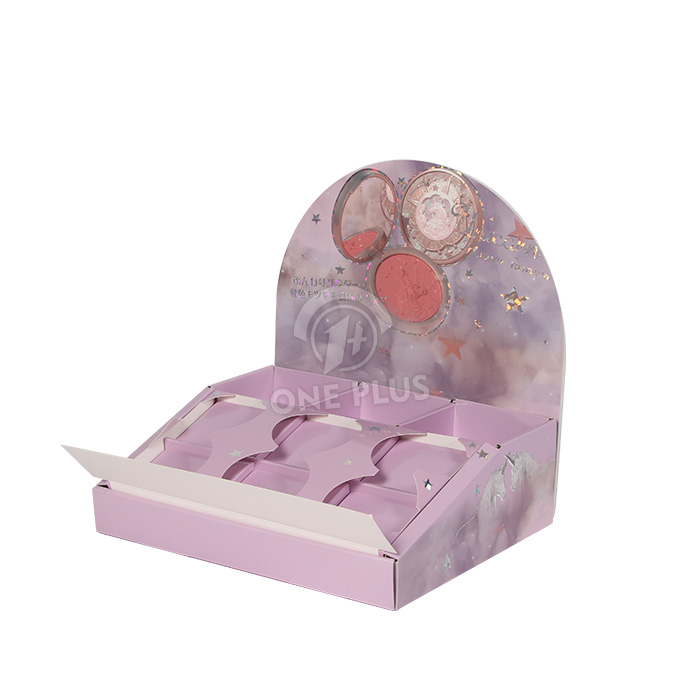


From a Sealed Shipper to a Selling Display in Seconds
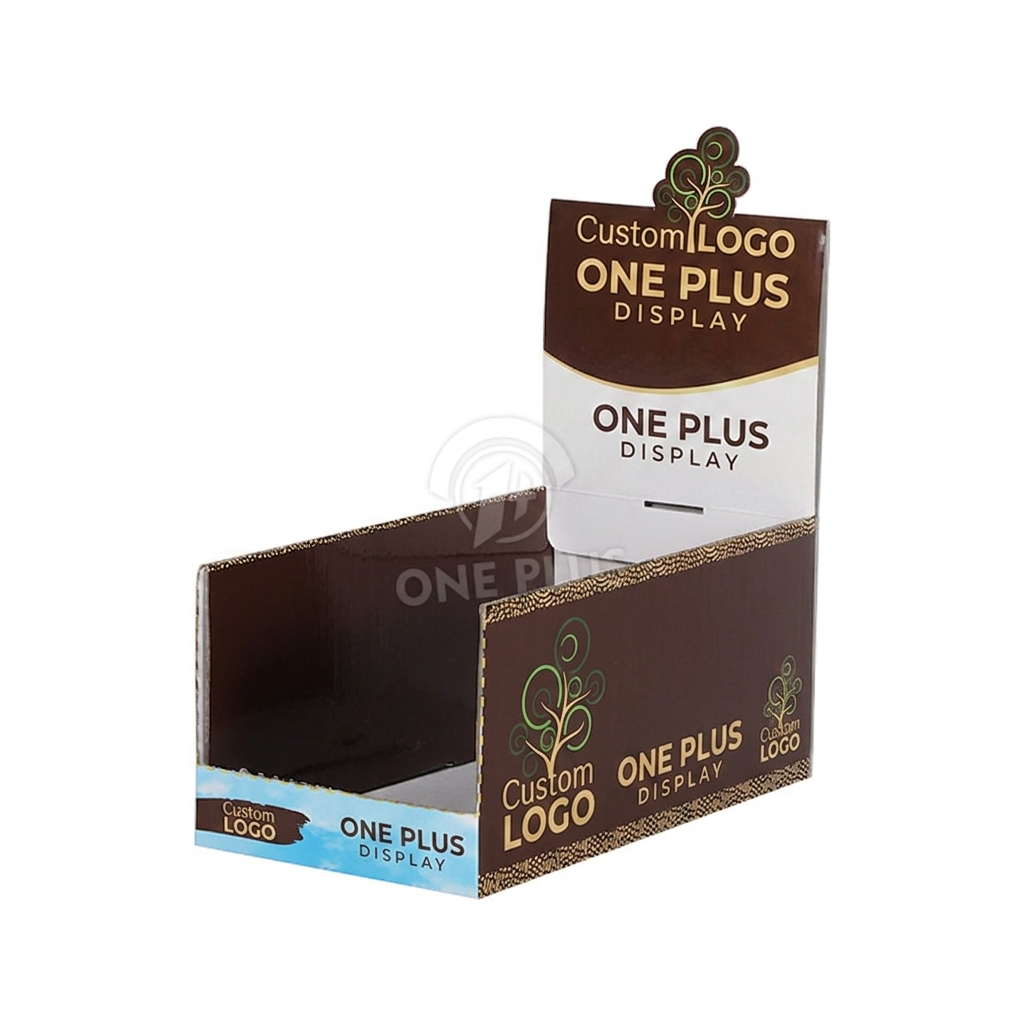
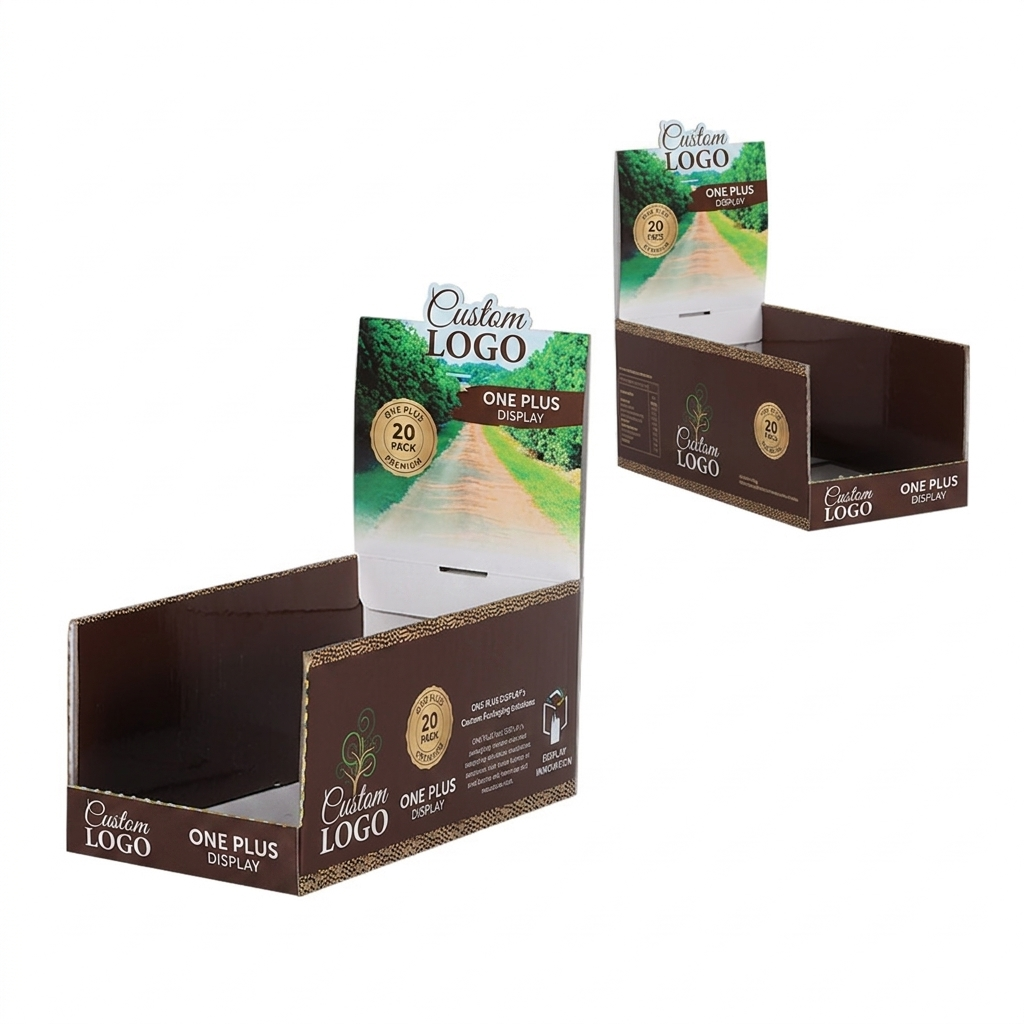
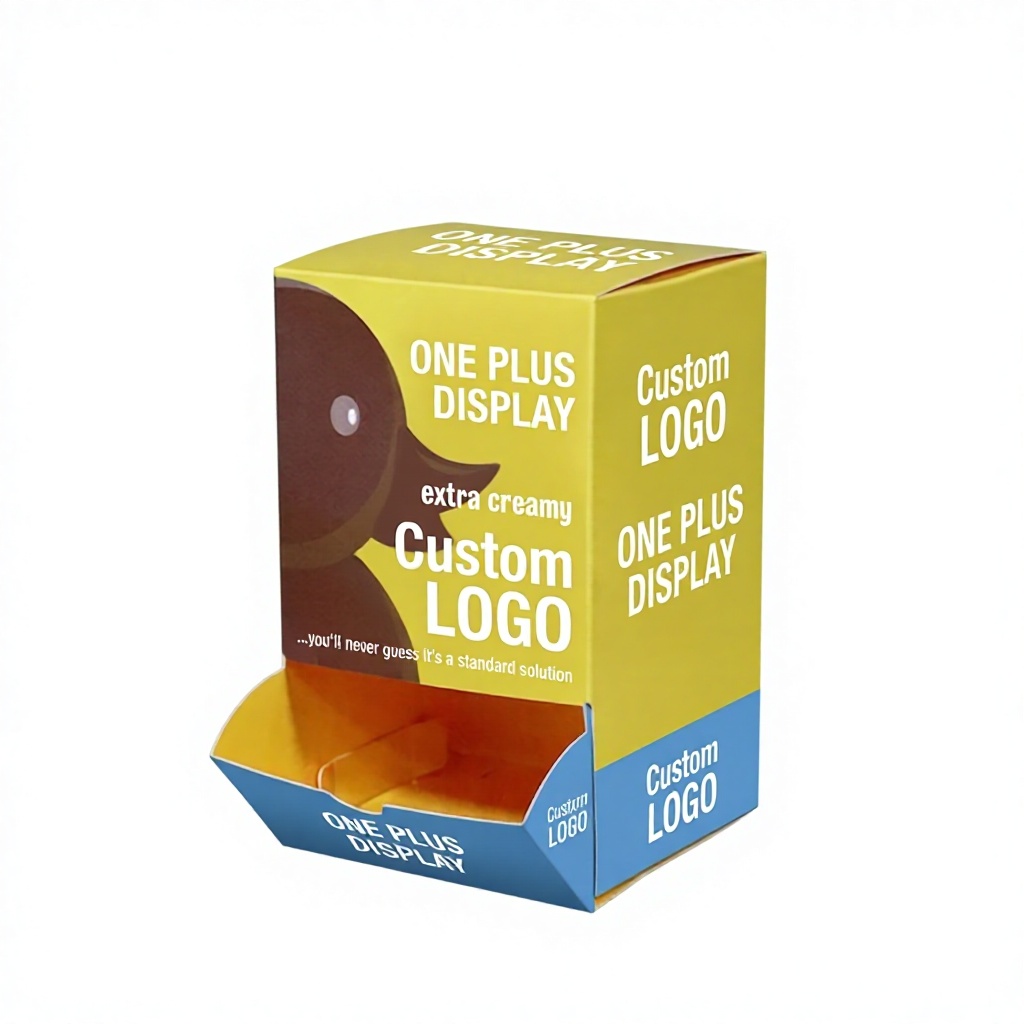
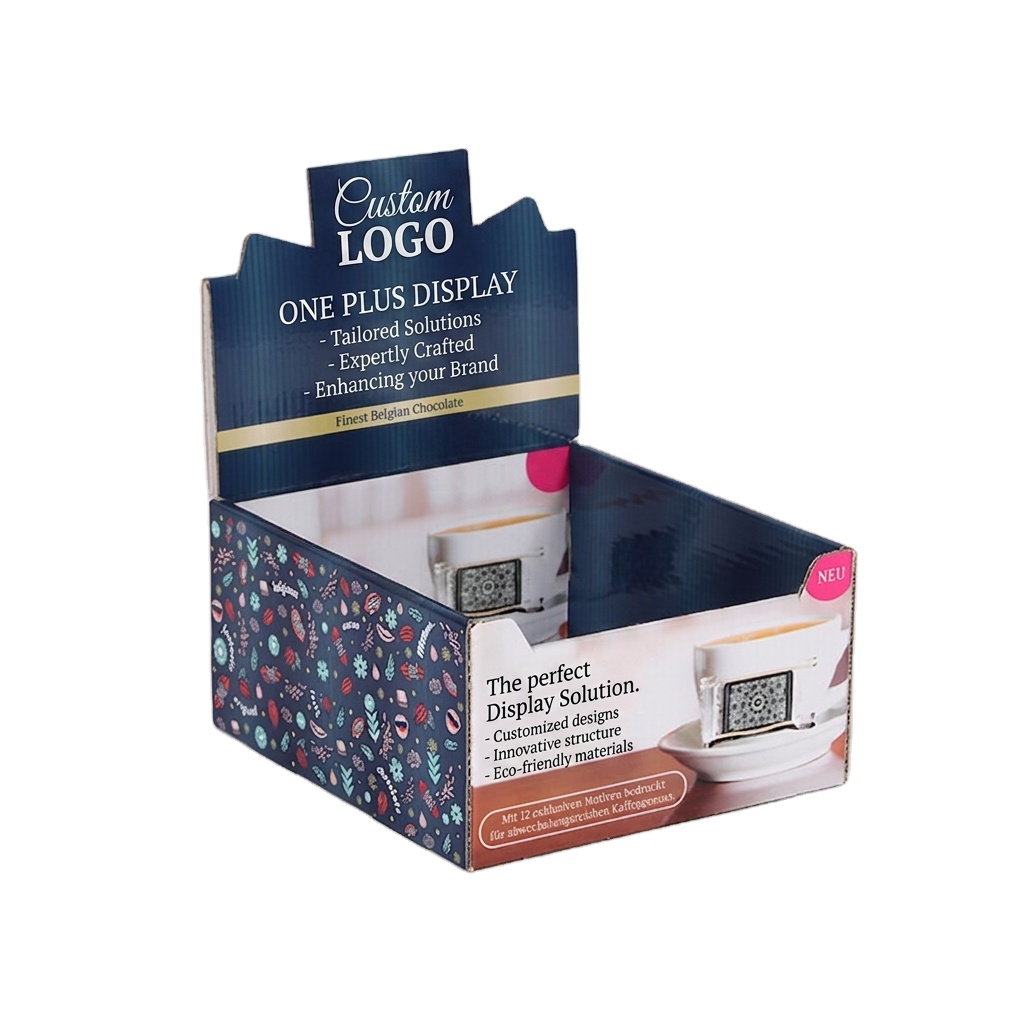
A grocery buyer opens a plain corrugated case on the checkout counter, flips the lid backward until it locks, and sets the unit beside the register. The lid has become an upright branding panel; the tray holds twelve snack bars at a slight angle. No separate header to insert, no shelf to stock. That single motion is the shelf ready packaging concept compressed into its smallest, most flexible form: a counter box that ships as a carton and sells as a display.
For snack and food brands, the counter is a high-traffic, low-competition zone. Shoppers waiting to pay are unoccupied for a few seconds, and a compact tray of single-serve items placed at eye level converts that pause into an impulse decision. Traditional counter displays, however, often arrive as two or three components: a base, a header, and sometimes a separate insert. Each part adds assembly labor, storage space, and the risk of a missing piece. A convertible PDQ tray with a fold-back header removes that complexity.
One Plus Display manufactures this format factory-direct in corrugated cardboard, with options for PVC foam board and acrylic where a more rigid or premium finish is required. This page explains how the structure works, where it performs best, and how to customize it for a specific snack or food product line.
Why the Convertible Counter Box Wins in Food and Snack Retail
Snack products are small, light, and often bought on impulse. They do not need deep shelving; they need visibility and proximity to the till. A counter box delivers both. Because the unit arrives pre-packed or flat and converts in seconds, staff can replenish it without leaving the register area. That matters in convenience stores, cafes, and pharmacy checkout lanes where labor is thin and every extra task competes with customer service.
The fold-back header is the defining advantage. It eliminates a separate printed header card, which is the part most likely to be damaged, lost, or inserted backward. The header also uses the lid surface that would otherwise be waste. In a small format, that reclaimed branding space is significant: a logo, a flavor callout, or a price flash can face the shopper directly at the moment of decision.
Compared with a standard Готовая к выкладке упаковка tray, the counter box is more compact and more enclosed. It protects goods during transit because it ships as a closed tuck-top carton, then opens into a display. That dual function reduces packaging material and pack-out time for co-packers and distributors.
For food brands, the counter format also supports portion control and freshness messaging. A low front lip keeps wrappers and small packs facing the shopper without hiding the product behind a tall wall. The result is a display that merchandises the product rather than the packaging.
Where it fits in the snack aisle and beyond
Although designed for the counter, the same structure works on a shelf edge, a deli counter, or a hotel reception desk. It suits:
- Single-serve chocolate bars, protein bites, and granola packs
- Gum, mints, and breath-freshening items
- Travel-size snacks and trail mix pouches
- Sample packs for new flavor launches
- Seasonal or limited-edition confectionery
Structural and Engineering Decisions
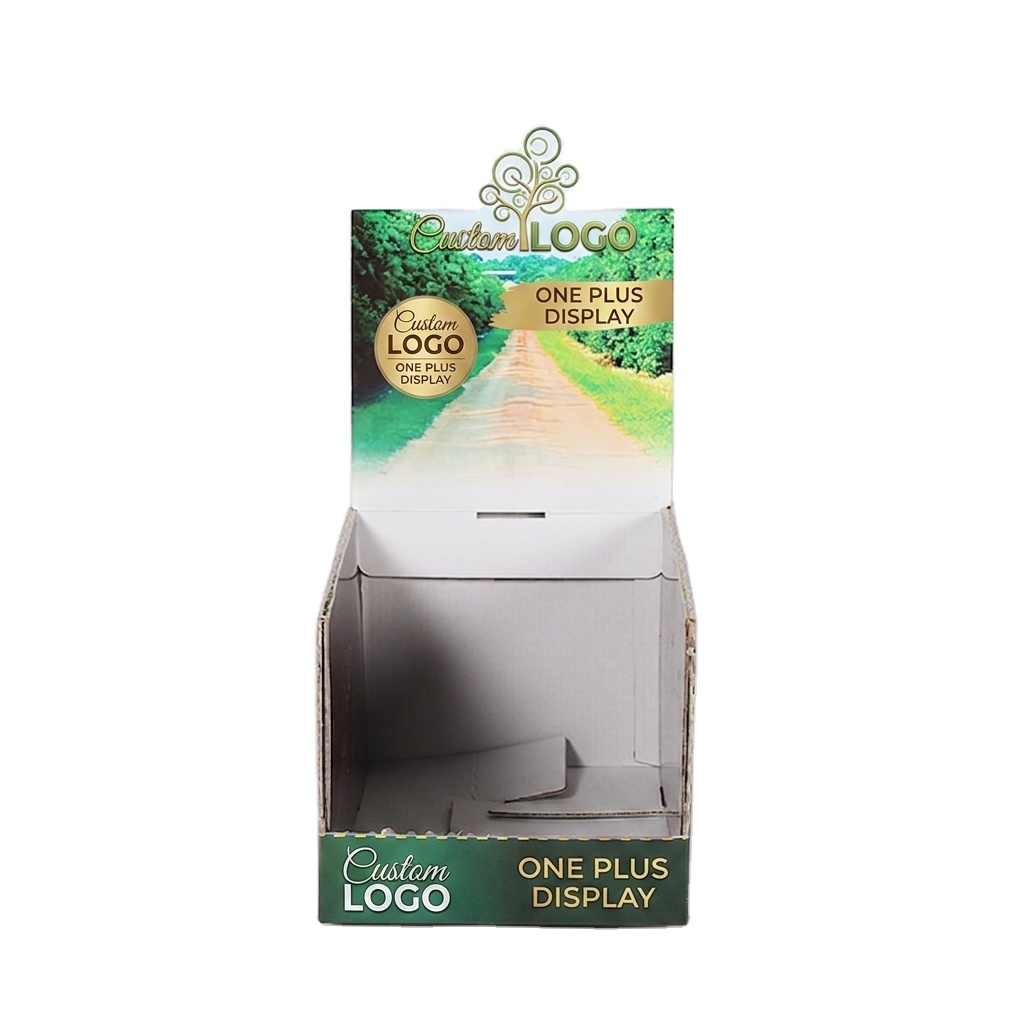
The convertible counter box is built around a tuck-top carton with a fold-back display header. The lid is scored so it can hinge backward and lock into an upright position. Locking tabs on the rear of the box engage when the lid is folded, keeping the header rigid during handling and restocking. This is not a friction-fit flap; it is a positive lock that resists accidental collapse when a shopper reaches for a product.
The front panel is cut lower than the rear to create a shallow tray. That low front lip exposes the product and allows easy access. The depth and height of the lip are customizable: a deeper tray suits taller bags or boxes, while a shallower tray is better for flat bars and pouches. The internal footprint can be divided with a custom cardboard insert or divider, which is useful for glass jars, fragile items, or mixed flavor assortments.
Material selection affects rigidity and print quality. E-flute corrugated cardboard is the standard choice: it is lightweight, printable, and strong enough for counter use. It can be laminated with 300g CCNB (coated clay news back) for a smooth, bright printing surface. For a more premium feel, PVC foam board or acrylic can replace the corrugated structure in whole or in part. PVC foam is denser and more moisture-resistant; acrylic offers a glass-like clarity for high-end confectionery or cosmetics. Each material changes the tooling, weight, and assembly method, so it is best to decide early in the design process.
Because the box is also a shipping container, the engineering must balance display appearance with transit protection. The locking tabs and header fold must not crease the printed surface. The corrugated flutes should run in the direction that resists bending during stacking. These details are resolved during sample making, not left to bulk production.
Materials and Finishing Options
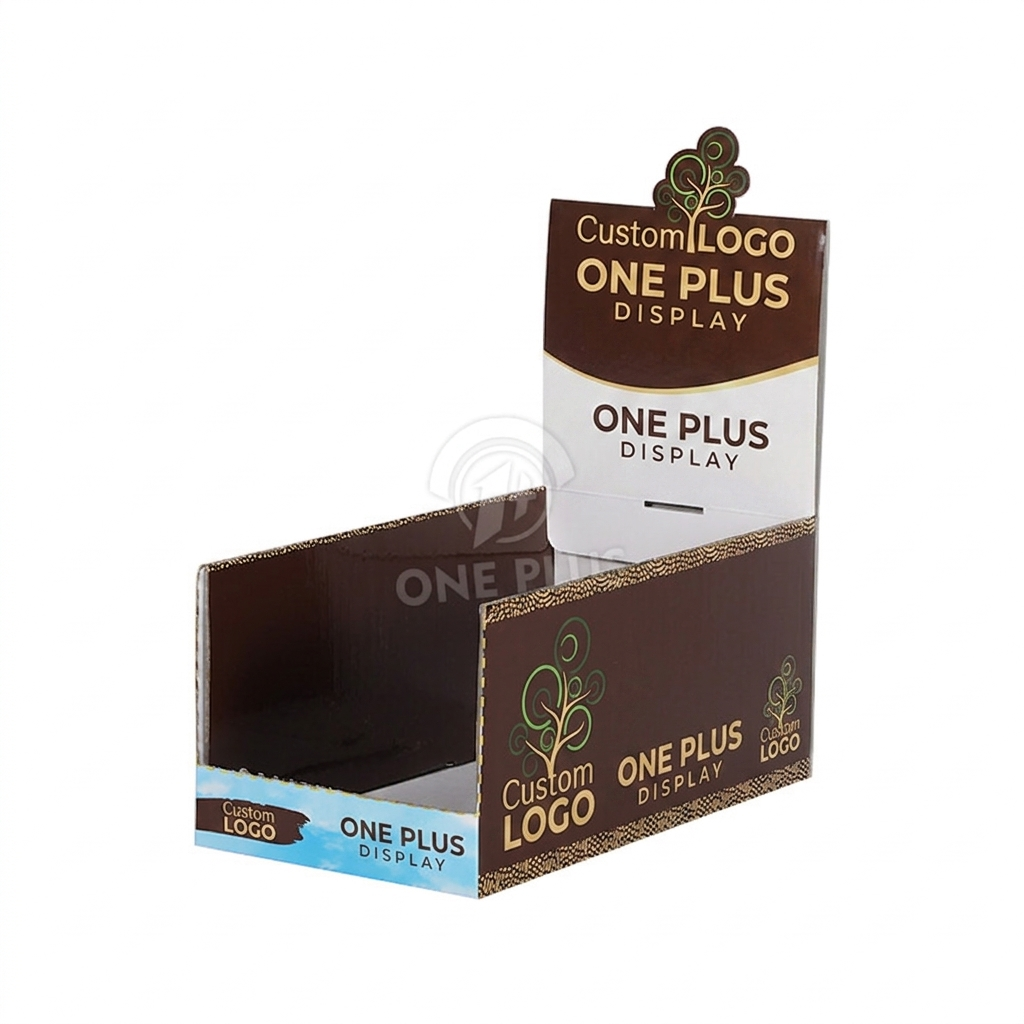
Most food and snack counter boxes are produced in E-flute corrugated cardboard with a 300g CCNB liner. This combination gives a flat, receptive surface for offset printing and enough rigidity for a countertop display. For heavier products or repeated handling, a B-flute or double-wall corrugated grade can be specified, though it increases the folded thickness and may affect pack-out counts.
Printing is typically 4C CMYK offset, which reproduces photographic imagery, gradients, and brand colors accurately. A glossy or matte lamination protects the print from scuffs and moisture. Spot UV, embossing, or foil stamping can be added for premium launches, but these finishes are usually reserved for the header and front panel where the shopper’s eye lands.
When the application calls for a non-cardboard finish, PVC foam board offers a smooth, rigid surface that resists denting and can be wiped clean. Acrylic provides transparency and a high-end look, often used for cosmetics and small electronics. Both materials can be combined with a corrugated base or insert to control cost while keeping the visible surfaces premium. Dimensions, flute grade, liner weight, and finishing are all customizable; the factory will recommend a range based on the product weight, pack count, and distribution method.
Merchandising and Retail Placement
Placement is the difference between a display that sells and one that occupies space. The counter box is designed for the point of sale: beside the register, on the customer-facing side of a checkout lane, or on a shelf edge at eye level. The pop-up header should face the queue, not the cashier. In a cafe, it can sit next to the pastry case; in a pharmacy, near the prescription pickup counter.
The low front lip and open tray encourage self-selection. Products should be arranged so the brand name and flavor are visible without lifting. For multiple flavors, a divided insert keeps each variety separated and makes restocking faster. The header can carry a price point, a promotional message, or a QR code linking to a larger product range. Because the header is part of the lid, it can be printed on both sides: the outer face for shoppers, the inner face for staff instructions or batch codes.
For food products, check that the display does not obstruct food safety requirements or block access to hygiene stations. In most retail environments, a compact counter box improves the shopping experience by keeping small items tidy and accessible.
Customization and Production Workflow
Every counter box is made to order. The process starts with the product dimensions and pack count: how many units per tray, how they are arranged, and whether they need an insert. From there, the structural design defines the tray depth, header height, and locking tab position. A white sample or a printed prototype is produced for fit and function testing before bulk production.
Artwork is prepared for offset printing, with attention to bleed, safe zones, and the fold lines. The factory provides dielines and guides to ensure the header artwork aligns with the folded position. Once the sample is approved, bulk production typically runs 10–12 days, depending on quantity and finishing. Minimum order is 500 pieces. Units can ship flat for local assembly or pre-packed with product through co-packing services.
For brands already working with a contract packer, the display can be delivered flat and assembled on the packing line. For those shipping directly to retail distribution centers, a master shipping carton holding several display units is recommended to protect the print during transit.
Three Concrete Use-Case Scenarios
1. Convenience store chain launching a new protein bar
A snack brand wants to test a new protein bar in 200 convenience stores. The counter box is configured to hold 12 bars, with a pop-up header showing the flavor name and a “new” flash. Stores receive the boxes pre-packed, open the lid, and place them beside the register. The compact footprint fits even where shelf space is limited, and the header does the selling without a separate display unit.
2. Cafe chain selling travel-size trail mix
A cafe operator adds a counter display for impulse purchases at the pickup counter. The box holds 20 small pouches in two rows, separated by a cardboard divider. The header carries the cafe’s logo and a QR code for nutritional information. Because the box ships flat, the cafe’s central kitchen can assemble and fill them before distributing to branches.
3. Pharmacy chain promoting seasonal chocolates
During a holiday promotion, a pharmacy places counter boxes of wrapped chocolates near the checkout. The box is printed in festive colors with a fold-back header featuring the brand. The low front lip lets customers pick individual pieces, and the locking tabs keep the header upright through repeated handling. After the promotion, the boxes are recycled with other cardboard.
Assembly, Packing and Logistics
The counter box is designed for simple assembly. If shipped flat, staff fold the base, tuck the lid, and push the locking tabs into place. The entire process takes seconds and requires no tools or tape. For co-packed units, the display arrives already filled and closed, so store staff only need to open the lid and fold it back.
For shipping, the recommendation is to place display units inside a master carton. This protects the printed header and front panel from scuffs and moisture during transit. A master carton of 4 or 6 units is typical, but the exact count depends on the display size. If the display is used as the primary shipping container, the corrugated grade and locking tabs must be tested for the intended carrier’s handling conditions. In most cases, an outer carton is still advised to keep graphics pristine.
Units ship flat or pre-packed. Flat shipping reduces freight volume and storage space; pre-packed shipping reduces labor at the destination. The choice depends on whether the brand has a co-packing partner or relies on store staff. Lead time for bulk production is typically 10–12 days after sample approval, with additional time for shipping.
Frequently Asked Questions
Надежно ли держится заголовок?
Yes. The structure includes locking tabs on the back of the box. When the lid is folded backward, these tabs engage to hold the header upright and rigid. The header will not collapse when customers reach for products.
Могу ли я использовать это для доставки без внешней коробки?
It depends on the carrier and the product weight. The box is sturdy, but we usually recommend placing display units inside a master shipping carton to protect the print and prevent damage. This is especially important for food products that must arrive in pristine packaging.
Можете ли вы добавить вставку для моих продуктов?
Yes. If you have fragile bottles, jars, or mixed flavors, we can design a custom cardboard insert or divider to keep each item separated and secure during transit. Inserts also make restocking faster and neater.
What is the minimum order and lead time?
The minimum order is 500 pieces. Lead time for bulk production is typically 10–12 days after artwork and sample approval. Shipping time depends on destination and freight method.
Ready to Build Your Counter Display?
If you are launching a snack, food, or small product line and want a display that ships and sells in one piece, send us your product dimensions and pack count. We will recommend a structure, material, and print finish, and provide a sample for your approval. One Plus Display works factory-direct, so you can customize the box to fit your exact product and brand. Contact us to start your project.