Turn a Golf Club Aisle Into a Brand Experience
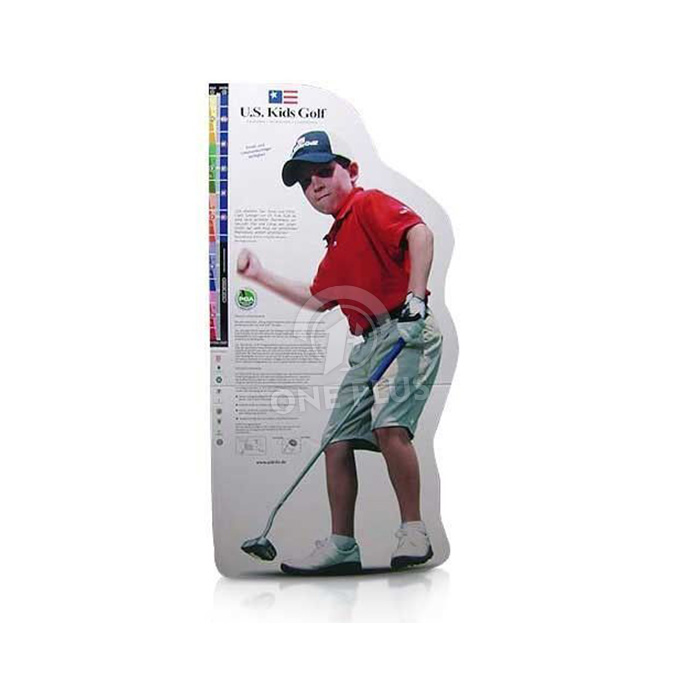
Picture a customer walking down the golf aisle of a sporting goods store. They pause in front of a lifesize cutout of a golfer mid-swing, club extended, eyes locked on an invisible fairway. The standee isn’t just a cardboard figure; it’s a silent salesperson that commands attention, breaks the monotony of boxed clubs, and invites shoppers to step closer. That moment of pause is where a well-designed standee earns its keep.
For golf retailers and brand managers, floor space is a battleground. Racks of irons and drivers can blur together, and junior sets often get lost in the shuffle. A lifesize character standee changes the dynamics by adding a human-scale focal point that shoppers can’t ignore. It’s not about shouting louder; it’s about giving the aisle a personality that aligns with the sport.
This article explores how a custom lifesize cardboard character cutout standee—engineered for golf clubs, junior sets, and training gear—can be deployed as a premium floor-standing merchandiser. We’ll cover why this format works for sports retail, the structural decisions that keep it upright, material and finishing choices, placement strategy, customization workflow, real-world scenarios, and logistics. By the end, you’ll know whether a standee belongs in your next retail campaign.
Why a Lifesize Standee Wins in Sports Retail
Sports retail is experiential by nature. Shoppers want to feel connected to the game, the players, and the lifestyle. A flat shelf tag can’t do that. A lifesize standee, however, creates a three-dimensional presence that mimics a real athlete standing in the aisle. This is especially powerful for golf, where the product is aspirational and technique-driven.
Unlike traditional shelving or endcaps, a standee occupies vertical space without requiring a dedicated rack. It can be placed at the end of an aisle, near a fitting bay, or beside a promotional table. Its contour—whether a driver swing or a putting stance—acts as a visual anchor that pulls traffic from cross-aisles. According to retail eye-tracking studies, human-shaped figures draw longer gaze durations than rectangular signage, which translates to more time spent near the product.
Moreover, a standee can integrate functional elements that assist the sale. Side panels can display sizing charts, club specifications, or junior height recommendations. This turns the display into a self-service tool, reducing reliance on floor staff and empowering customers to make informed choices. For brands, it’s a chance to own the narrative at the point of purchase.
Structural and Engineering Decisions
A lifesize standee must stand up to retail reality: foot traffic, accidental bumps, and the occasional leaning shopper. The engineering starts with the die-cut path. Using CNC routing, the silhouette is traced with high precision to match the athlete’s outline, ensuring clean edges and a recognizable form. The corrugated board is selected for rigidity, typically B-flute or a double-wall grade, to prevent warping or sagging over time.
The rear easel is the unsung hero. A simple A-frame strut can be flimsy, so we use an interlocking easel design with slot-and-tab construction. This creates a stable tripod effect that keeps the standee upright even when nudged. The easel is attached to a reinforced backer panel, which distributes weight and prevents the board from buckling. For larger standees—over 1.5 meters—we may add a secondary support strut or a weighted base insert, depending on the center of gravity.
Another critical decision is the base. Some standees rely solely on the easel, while others use a fold-out foot that extends forward. The foot increases the footprint slightly but dramatically improves stability. We can also integrate a channel for a removable metal weight if the standee will be placed in a high-traffic zone. All these options are evaluated during prototyping to ensure the standee meets the specific retail environment.
Materials and Finishing Options
The substrate sets the tone for durability and print quality. For most indoor golf retail displays, we recommend high-rigidity corrugated cardboard with a smooth liner. This provides a flat surface for vibrant graphics and holds up well to die-cutting. B-flute is a common choice for standees up to 1.8 meters tall, offering a good balance of strength and weight. For taller or more complex shapes, we may switch to a double-wall corrugated board for added stiffness.
When a more premium feel is required, PVC foam board becomes an option. It’s denser, moisture-resistant, and can be routed with a cleaner edge. However, it’s heavier and more expensive, so it’s typically reserved for high-end brand activations or long-term installations. Acrylic is another alternative for a truly upscale look—transparent or colored—but it requires special handling and is best for smaller contour elements or accents rather than full-body standees.
Printing methods vary by run size and desired finish. For large campaigns, offset printing delivers consistent color across thousands of units. For shorter runs or variable graphics, UV digital printing offers flexibility without plate costs. Lamination—gloss for a shiny, energetic look or matte for a sophisticated, glare-free finish—adds a protective layer that resists scuffing and moisture. We can also apply spot UV or embossing for tactile highlights on logos or key features.
| Materiale | Thickness Range | Best For |
|---|---|---|
| Corrugated Cardboard (B-flute) | 3–5 mm | Standard indoor standees, cost-effective, recyclable |
| Double-wall Corrugated | 6–10 mm | Taller standees, added rigidity |
| Høy volumlagerkapasitet. | 3–10 mm | Premium feel, moisture resistance, long-term use |
| Acrylic | 2–8 mm | High-end accents, transparent elements |
Merchandising and Retail Placement
Where you place a standee determines its impact. In a golf specialty store, the highest-traffic zones are the entrance, the club fitting area, and the checkout queue. A standee near the entrance sets the tone for the shopping experience, especially if it holds a club or points toward a promotion. In the fitting area, it can serve as a visual aid, with side panels listing shaft flex options or loft angles.
For big-box sporting goods retailers, endcaps and aisle intersections are prime real estate. A standee at the end of a golf aisle can stop shoppers who might otherwise walk past. Pair it with a small promotional table or a basket of golf balls to create a mini-destination. If the store has a junior section, a smaller-scale standee—perhaps a junior golfer silhouette—can speak directly to parents and kids.
Integration with existing fixtures matters. The standee should complement, not compete with, surrounding displays. We often design the base to fit within standard aisle widths and ensure the easel doesn’t block product access. For stores with limited floor space, a wall-mounted version or a countertop standee from our standee & totem displays range can achieve similar impact without the footprint.

Customization and Production Workflow
Every standee begins with your artwork and objectives. You provide high-resolution athlete photography or brand graphics, along with any mandatory elements like logos, taglines, or regulatory text. Our engineering team then creates a die-cut path that traces the silhouette. If you have a specific pose in mind—a follow-through, a putt, a celebration—we can adapt the contour accordingly. The goal is a seamless blend of form and function.
Next, we produce a digital proof and, if needed, a physical prototype. Prototyping is especially valuable for lifesize standees because it allows you to check proportions, stability, and print vibrancy before committing to a full run. We can also test the easel mechanism and make adjustments to the slot-and-tab fit. Once approved, production moves to printing, die-cutting, and finishing. Quality checks occur at each stage, from color accuracy to structural integrity.
For brands with multiple SKUs or seasonal campaigns, we can incorporate variable data or modular side panels that can be swapped out. This extends the life of the standee and reduces waste. Similarly, if you’re planning a series of standees—say, for different sports—we can maintain a consistent structural platform while varying the graphics and contours. This approach is similar to our work on a custom cardboard display totem for shoes, where a core structure supports multiple brand expressions.
Three Concrete Use-Case Scenarios
1. Golf Club Launch at a Specialty Retailer
A premium golf brand launches a new line of drivers. They place a lifesize standee of a touring professional mid-swing near the club display. The standee’s side panel highlights key technology features and a comparison chart of loft options. Shoppers can physically stand next to the cutout for a photo, which they share on social media—extending the campaign’s reach. The standee becomes a talking point and a conversion tool.
2. Junior Golf Program Promotion at a Big-Box Store
A sporting goods chain wants to boost enrollment in its junior golf clinics. They use a smaller-scale standee of a junior golfer, placed in the youth sports section. The standee includes a QR code that links to a registration page and a height chart to help parents choose the right club size. The friendly, approachable design puts kids at ease and gives parents a clear call to action.
3. Seasonal Sale Event at a Golf Course Pro Shop
A golf course pro shop runs a spring sale on apparel and accessories. They position a standee near the entrance, dressed in the season’s featured outfit. The standee holds a removable sign that announces the discount. Because the standee is flat-packed and easy to assemble, the shop staff can set it up in minutes and store it flat when the sale ends. The display adds a festive, energetic feel without requiring permanent fixtures.
Assembly, Packing and Logistics
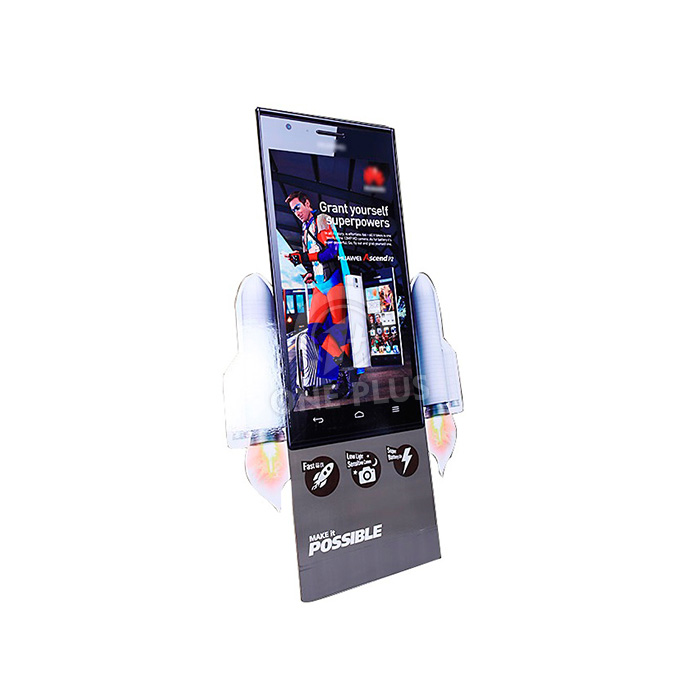
One of the biggest advantages of a cardboard standee is its logistics efficiency. The standee ships flat, with the easel folded against the back. Assembly requires no tools: the pre-scored panels unfold, and the easel locks into place with slot-and-tab folds. In-store staff can have it standing in under a minute. This simplicity reduces labor costs and ensures consistent setup across multiple locations.
For shipping, we optimize the flat-packed dimensions to minimize volume. A typical lifesize standee might ship in a carton that is a fraction of its assembled size, which lowers freight costs and carbon footprint. We can also include a protective sleeve or corner guards to prevent edge damage during transit. If you’re distributing to many stores, we can pack standees in master cartons with individual assembly instructions and branded labeling.
Storage is equally straightforward. When the promotion ends, the standee folds flat and can be stored in a backroom or recycled. For brands running multiple campaigns, we recommend labeling the carton for easy identification. If you need to ship standees to different regions, we can provide custom palletization and labeling to streamline distribution.
Frequently Asked Questions
Kan den grafiske skissen tilpasses for profesjonelle golfspillere for voksne eller alternativ sportsutstyr?
Yes, completely. This is a fully customizable standee. Simply provide your high-resolution athlete photography or marketing graphics, and our engineering team will create a matching die-cut silhouette path tailored exactly to your brand campaign. We can adapt the contour for any pose, sport, or character.
Hvor enkelt kan denne pappstandeen monteres i butikken?
Assembly is remarkably quick and requires zero tools. The standee is pre-scored for easy unfolding, and the rear backing easel structure locks firmly into place using integrated slot-and-tab folds in less than a minute. No training or special skills are needed.
What is the typical lead time for a custom standee order?
Lead times vary based on complexity, quantity, and finishing options. For standard orders, production typically takes 2–4 weeks after artwork approval. Rush options may be available. We’ll provide a detailed timeline during the quoting process.
Can the standee be used outdoors or in humid environments?
Standard corrugated cardboard standees are designed for indoor use. For outdoor or humid environments, we recommend upgrading to moisture-resistant coatings or PVC foam board. We can advise on the best material for your specific conditions.
Ready to Bring Your Golf Brand to Life?
If you’re looking to create a retail display that stops traffic, tells a story, and drives sales, a custom lifesize standee is a proven solution. One Plus Display specializes in factory-direct production of corrugated, PVC, and acrylic displays, with end-to-end support from design to delivery. Whether you need a single standee for a pro shop or a nationwide rollout, we can scale to your needs.
Contact us today to discuss your project. Share your artwork, your goals, and your timeline—we’ll handle the rest. Let’s turn your aisle into an experience. For more inspiration, see how we’ve adapted die-cut silhouettes for a lifesize movie promotional standee, and imagine the possibilities for your golf campaign.