Capturing Attention in the Instant Noodle Aisle
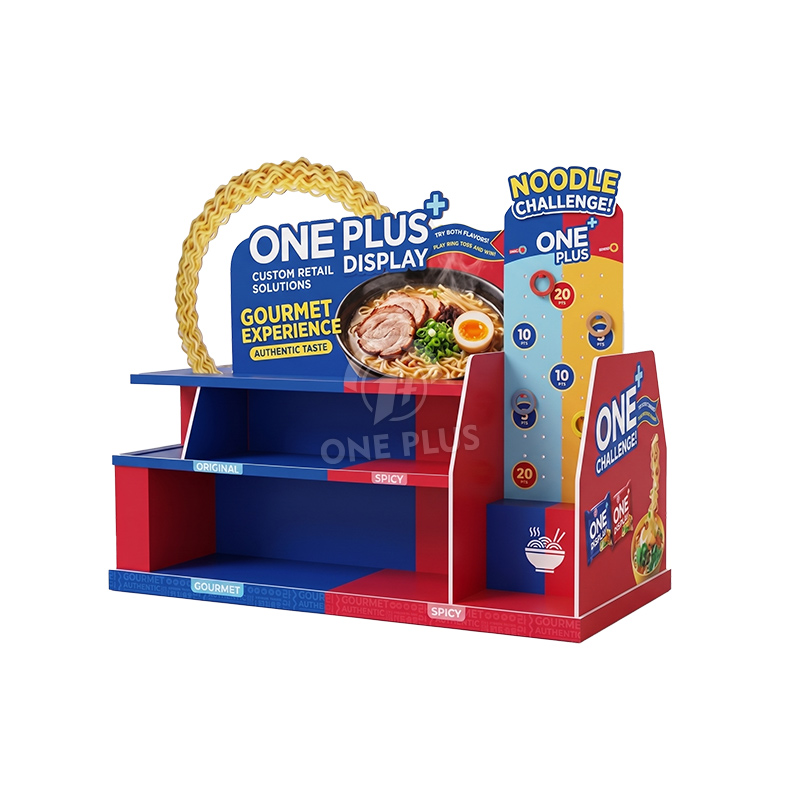
A shopper pauses in the instant noodle aisle, scanning the shelves for a quick lunch option. Amidst a sea of similar packages, a display catches their eye: a colorful, interactive unit with a ring-toss game and clearly separated flavor sections. They step closer, engage with the game, and end up picking up two packs instead of one. This is the power of an interactive retail merchandiser—and it’s exactly what the custom cardboard display stand for instant noodles delivers.
Instant noodles are an impulse-driven category. Shoppers often decide within seconds, influenced by visibility, novelty, and ease of selection. A standard shelf or plain floor display rarely sparks that impulse. But an interactive unit transforms a routine purchase into a playful experience, increasing dwell time and, ultimately, basket size.
In this article, we explore how a corrugated cardboard display with an integrated “Noodle Challenge” ring-toss board can elevate your instant noodle brand. From structural engineering to material choices and real-world use cases, we cover everything retail buyers and brand managers need to know before commissioning a custom unit.
Why This Format Wins for Instant Noodles
Instant noodles compete in a crowded, price-sensitive market. Differentiation is tough when products look alike and sit side by side. An interactive display solves three critical retail challenges:
- Interruption: The ring-toss game creates a pattern interrupt, pulling shoppers out of autopilot. Games trigger curiosity and a sense of challenge—two powerful psychological hooks.
- Dwell time: Every second a shopper spends interacting with the display is a second they’re not walking past your brand. Longer dwell time correlates with higher conversion.
- Flavor discovery: Partitioned sections for Original, Spicy, and other variants make it easy for shoppers to compare and choose. This reduces decision fatigue and encourages trial across flavors.
Moreover, the 3D structural elements—such as a bold noodle bowl shape or protruding game board—make the unit a visual landmark in the aisle. Shoppers can spot it from several meters away, guiding them directly to your products.
For brands, this format also offers a cost-effective alternative to permanent fixtures. A custom cardboard floor display stand can be produced in smaller runs, updated with new graphics, and recycled after use—aligning with sustainability goals without sacrificing impact.
Structural and Engineering Decisions
Building a display that supports both playful interaction and the weight of multiple noodle packs requires careful engineering. Here’s how we approach the key structural elements:
Base and Weight Distribution
The unit must remain stable even when shoppers lean on it or toss rings. We design a wide, low center of gravity base, often with internal corrugated baffles that create a honeycomb-like structure. This distributes weight evenly and prevents tipping. For heavier loads, we can incorporate a double-wall or triple-wall corrugated base.
Shelving and Load Capacity
Instant noodle packs are relatively light, but a fully loaded display can still hold dozens of units. Each shelf is engineered with a specific load range—typically up to several kilograms per shelf—depending on the corrugated grade and support structure. We use die-cut slots and interlocking tabs to create shelves that assemble without tools but stay rigid in use.
Interactive Game Integration
The ring-toss board is mounted at an angle for easy play. We reinforce the mounting area with additional layers of corrugated board or a PVC foam backing to withstand repeated ring impacts. The rings themselves can be made from lightweight plastic or cardboard, stored in a built-in pouch when not in use.
3D Design Elements
To achieve a creative 3D shape—like a giant noodle bowl or a stylized chopstick arch—we use a combination of folding, slotting, and multi-part assembly. These elements are designed for flat-pack shipping and tool-free assembly, ensuring they arrive intact and are easy to set up in-store.
Materials and Finishing Options
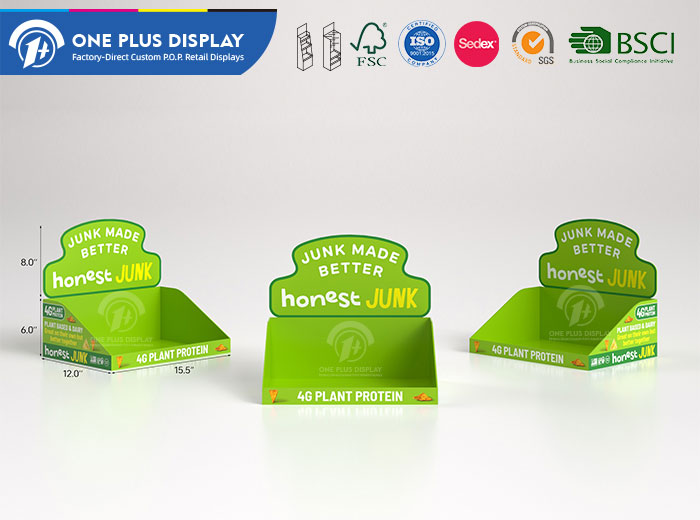
While the primary material is premium corrugated cardboard, we offer a range of substrates and finishes to match your brand and budget.
Corrugated Grades
We select from single-wall, double-wall, and triple-wall corrugated boards. Single-wall is suitable for lightweight displays and short-term promotions. Double-wall offers greater strength for heavier products or longer campaigns. Triple-wall is reserved for large, high-load units or those requiring exceptional durability.
PVC 폼 보드
For components that need a smoother, more rigid finish—such as the game board or shelf edges—we can use PVC foam board. It’s moisture-resistant, easy to clean, and can be printed directly. This is ideal for areas prone to spills or high humidity.
Acrylic Enhancements
Acrylic can be added for a premium look: clear shelves, branded logos, or protective barriers for the game area. Acrylic is shatter-resistant and can be bent or shaped, offering design flexibility. We often use it for small parts that need extra durability.
Printing and Finishing
We offer full-color litho-lamination, flexographic printing, and digital printing. Finishes include matte or gloss varnish, aqueous coating, and anti-scuff protection. For a tactile effect, we can apply soft-touch lamination or spot UV. All finishes are customizable to your brand guidelines.
Merchandising and Retail Placement
Where you place this display determines its success. Here are key considerations:
- Aisle end caps: High-traffic areas where shoppers turn corners. The interactive element stops them and invites engagement.
- In-aisle floor position: Directly in front of the noodle section, creating a branded destination within the category.
- Checkout zones: For impulse purchases, a smaller version of this display can work near registers.
The partitioned shelving should be merchandised with clear flavor separation. Use bold headers like “Original” and “Spicy” to guide shoppers. The ring-toss game can be themed around flavors—for example, tossing a ring onto a “Spicy” peg might earn a coupon. This ties the game directly to purchase behavior.
For more insights on free-standing display units, see our article on what is a free standing display unit.
Customization and Production Workflow
Every brand has unique needs. Our customization process starts with your specifications:
- Consultation: We discuss your product dimensions, weight, target retail environment, and campaign goals.
- Design and Prototyping: Our team creates 3D renderings and a physical prototype for approval. You’ll see exactly how the interactive element works and how flavors are partitioned.
- Material Selection: Choose corrugated grade, finishes, and add-ons like PVC foam or acrylic.
- Production: High-speed die-cutting, printing, and assembly. We maintain strict quality control.
- Delivery: Flat-packed with assembly instructions, shipped to your warehouse or directly to stores.
For PDQ displays and other quick-ship options, read what is “pretty darn quick” (PDQ) in retail.
Three Concrete Use-Case Scenarios
1. Supermarket Chain Launch
A national supermarket chain launches a new spicy noodle flavor. They place interactive displays at the end of every noodle aisle. Shoppers play the ring-toss game, and those who win receive a discount coupon. The display holds both the new flavor and the classic original, encouraging cross-sell. Within two weeks, sales of the new flavor exceed targets by a significant margin.
2. Convenience Store Promotion
A convenience store chain runs a summer promotion: “Beat the Heat with Noodles.” The display features a ring-toss game with a beach theme. It’s placed near the cold drinks section, capturing shoppers looking for a quick meal. The unit holds single-serve cups and multipacks, with clear signage for spicy and mild options. The interactive element increases impulse purchases during peak hours.
3. International Food Festival
At a food festival, a noodle brand uses the display as a sampling station. The ring-toss game draws a crowd, and staff hand out samples from the partitioned shelves. The 3D design—shaped like a giant noodle bowl—becomes a photo opportunity, generating social media buzz. The display is assembled on-site in minutes and withstands heavy foot traffic.
Assembly, Packing and Logistics
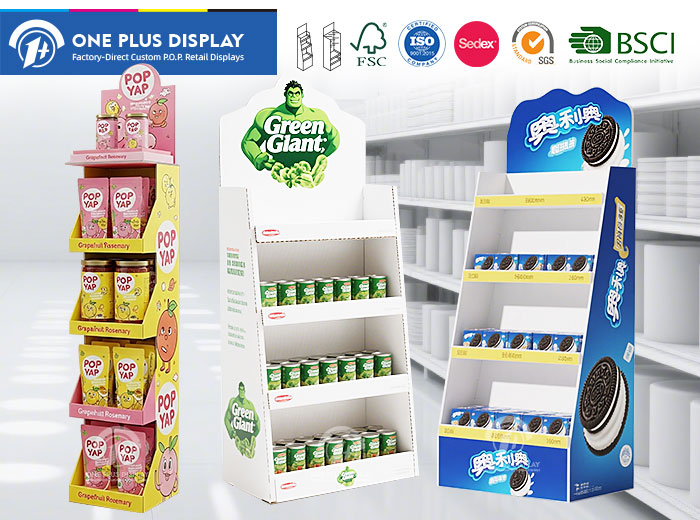
We design for efficient logistics. The display ships flat, reducing freight costs and storage space. Assembly is intuitive: interlocking tabs and slots mean no tools are required. Each unit comes with a clear instruction sheet, and we can provide assembly videos for retail staff.
Packing options include individual cartons or master cartons with multiple units. We use recycled and recyclable materials for packaging. For international shipments, we ensure all components meet phytosanitary requirements and are free of pests.
Our flat-pack designs typically assemble in under 10 minutes, minimizing labor costs at store level. The compact packing also means more units per pallet, lowering your carbon footprint per display.
Frequently Asked Questions
Can the ring-toss game be customized with our branding?
Absolutely. The game board, rings, and surrounding graphics can all be branded with your logos, colors, and messaging. We can even create custom ring shapes or themed targets.
What is the maximum weight each shelf can hold?
Load capacity depends on the corrugated grade and shelf design. We engineer each shelf to meet your specific product weight, typically ranging from a few kilograms to over 15 kilograms per shelf. We’ll provide exact specifications during prototyping.
Is the display suitable for long-term use?
Yes, with the right material choices. For long-term or high-traffic environments, we recommend double-wall corrugated or adding PVC foam reinforcements. We can also apply protective coatings to extend life.
How long does production take?
Standard production lead time is 4-6 weeks after prototype approval, depending on complexity and quantity. Rush options may be available.
Ready to Transform Your Noodle Sales?
An interactive display isn’t just a fixture—it’s a sales tool that engages, entertains, and converts. By combining a ring-toss game with smart flavor partitioning and rugged corrugated construction, you create a memorable retail experience that drives impulse purchases.
Contact One Plus Display today to discuss your custom cardboard display stand for instant noodles. Our team will guide you from concept to delivery, ensuring your brand stands out in the crowded aisle.