Three Tiers That Sell Dolls Before the Shopper Even Picks One Up
A shopper drifts past the collectibles aisle, glances down, and stops. On the counter sits a stepped display of blind boxes and chibi figures, each row angled so the character art faces outward. The top awning carries a bold brand logo, and the whole unit looks like a miniature storefront. That moment of pause is what a well-designed counter display is engineered to produce.
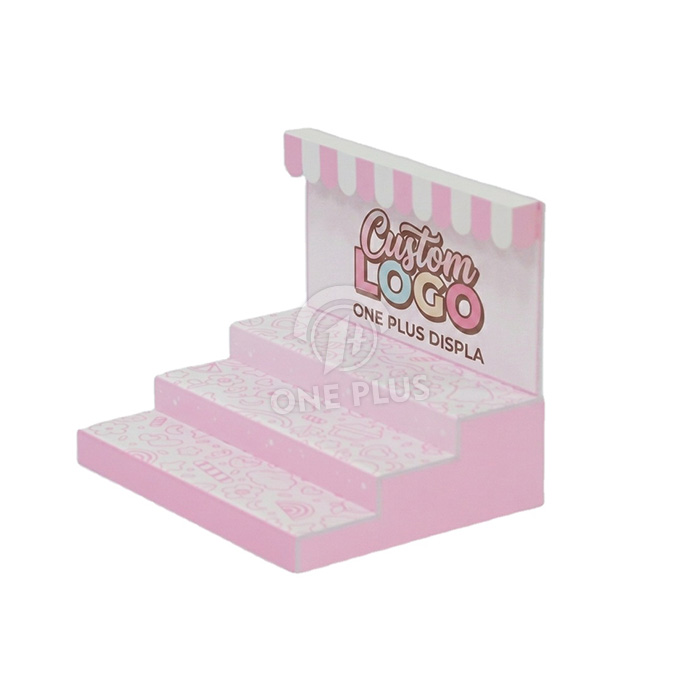
This 3-tier PVC countertop doll display stand is built for exactly that scenario. It turns a cramped countertop or shelf edge into a compact retail stage for blind boxes, vinyl figures, plush dolls, and acrylic standees. The cascading steps keep every product upright and forward-facing, while the die-cut canopy header gives your branding a dedicated place to live at eye level.
For toy and game brands, the challenge is rarely the product itself. It is getting a small, high-margin item to stand out in a crowded retail environment without a full floor fixture budget. This unit solves that specific problem: lightweight, printable, shippable, and easy for store staff to assemble in minutes.
Why the Countertop Format Wins for Toy and Game Merchandising
Counter space is the most contested real estate in any retail store. It is also the closest point to the customer’s hands and wallet. A countertop display earns its place by doing three jobs simultaneously: presenting product attractively, protecting it from being knocked over, and carrying brand messaging without requiring a salesperson to explain anything.
Unlike a floor-standing unit, a counter display can be placed at the point of purchase, near the register, or on a shelf edge where browsing happens naturally. For blind box and figurine categories, this proximity matters. These are often impulse purchases. The buyer does not arrive with a specific SKU in mind. They arrive curious, and the display has to convert that curiosity into a pick-up.
The stepped, three-tier layout addresses a common failure of flat counter trays: the back row disappears. When products are arranged on a single plane, the front items block the ones behind them. A cascading riser eliminates that blind spot. Each tier sits slightly higher and slightly behind the one in front, so the full assortment reads as a complete collection rather than a single row of samples.
This format also works harder per square centimeter than almost any other POP option. A compact footprint means you can place multiple units across a chain of stores without overwhelming the counter. That consistency is valuable for brand managers who need the same visual presentation in every location.
Structural and Engineering Decisions Behind the Stepped Riser
The core structure is a three-level stepped tabletop riser with a fixed top canopy panel. Each step is a horizontal shelf supported by vertical side panels that also serve as the structural spine of the unit. The canopy sits above the top tier, anchored to the rear uprights, creating a small overhang that frames the display and gives the header its stage.
What makes this design work in practice is not just the shape but the joinery. The components are cut with interlocking mortise-and-tenon profiles, meaning the shelves, side panels, and canopy slot together without glue or tools. This is a deliberate engineering choice. Glue creates assembly time, mess, and the risk of a wobbly joint if applied incorrectly. A well-toleranced slot-and-tab connection produces a rigid unit that a store associate can assemble correctly on the first try.
The stepped geometry also affects weight distribution. Because the tiers cascade backward, the center of mass stays low and central. Even when the top tier is loaded with heavier vinyl figures, the unit resists tipping. For brands that ship to markets with strict safety expectations, this stability is a design feature, not an afterthought.
Customization of the structure is possible without changing the fundamental engineering. The width and depth of each step can be adjusted, the height of the canopy clearance can be increased, and the number of tiers can be modified. These changes are handled by revising the CNC route paths rather than redesigning from scratch. That means a brand with larger plush toys or oversized collector figures can get a version of this display that still assembles cleanly and still ships flat.
Materials and Finishing Options for Toy Retail Displays
This display is built primarily from premium eco-friendly white PVC foam board, also known as Forex board. The material is available in 3mm, 5mm, and 8mm thicknesses. The choice of thickness is driven by the load the shelf needs to carry and the rigidity required for the canopy. Thinner boards keep the unit light and cost-effective, while thicker boards add structural confidence for heavier products or larger spans.
PVC foam board is a strong fit for toy and game retail because it is waterproof, scratch-resistant, and easy to wipe clean. In a store environment where products are handled constantly, a display that can be cleaned with a damp cloth without warping or delaminating is a practical advantage. It also holds printed graphics exceptionally well, which matters when the entire surface is part of the brand story.
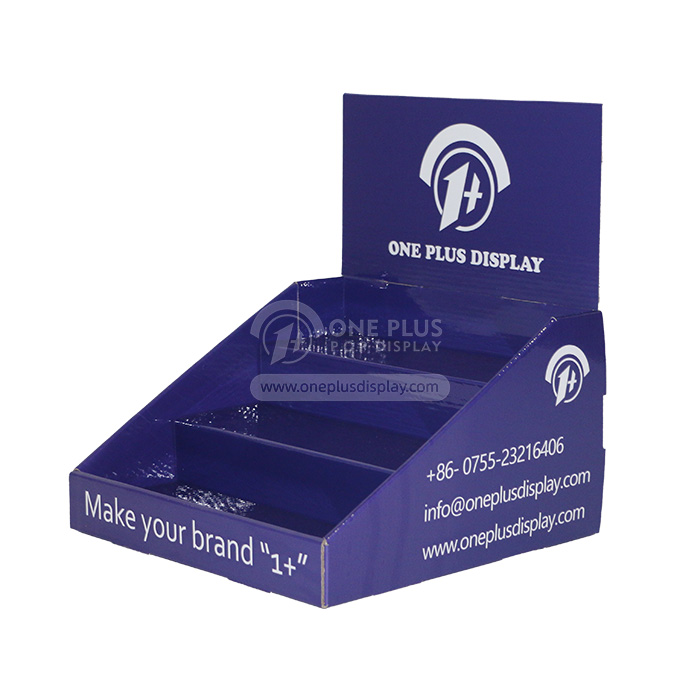
For brands exploring different material directions, other options are available. Corrugated cardboard countertop displays offer a lighter, lower-cost alternative for short-term promotions or trial runs. A custom corrugated cardboard countertop display stand can be a smart way to test a new market before committing to a longer-life fixture. On the premium end, acrylic countertop displays provide a glass-like clarity and a more upscale feel, which suits high-end collectibles or limited editions. Acrylic can also be combined with PVC or corrugated components to balance cost and perceived value.
Finishing options include full CMYK UV digital printing and silk-screen printing, both available with a protective matte overlay. UV flatbed printing allows for high-fidelity, full-surface graphics that wrap around the sides, steps, and canopy. Silk-screen printing is a good choice for solid color coverage or simpler brand marks where a thicker ink deposit is preferred. The matte overlay reduces glare under store lighting and protects the print from scuffing during shipping and handling.
| Material / Component | Typical Thickness Range | 最適な用途 |
|---|---|---|
| White PVC foam board (Forex) | 3mm, 5mm, 8mm | Main structure, steps, canopy, long-life retail use |
| Corrugated cardboard | Varies by flute grade | Short-term promotions, trial runs, budget-sensitive campaigns |
| Acrylic | Custom sheet thicknesses | Premium collectibles, high-clarity presentation, limited editions |
Merchandising and Retail Placement Strategy
Where this display goes determines how it should be configured. On a checkout counter, it works as an impulse unit. The top canopy draws the eye, the three tiers present a curated selection, and the compact footprint leaves room for the register and card reader. In a dedicated collectibles aisle, the same unit can sit on a shelf edge or endcap, acting as a branded focal point that breaks up rows of standard packaging.
The cascading steps are particularly effective for blind box assortments. Because each tier is visible from a standing position, customers can scan the full range without crouching or moving products aside. That reduces handling and keeps the display looking tidy throughout the day. For plush dolls, the stepped layout allows different characters to be grouped by tier, creating a natural visual hierarchy. For acrylic standees, the riser can be positioned so that light passes through the clear edges, adding a subtle premium effect.
Brand managers should also consider how the display supports restocking. A well-designed counter unit makes it obvious where each SKU belongs. When the steps are deep enough to hold a full row of product and the sides are printed with category cues, staff can replenish quickly without guessing. That is one of the less obvious but most valuable features of a custom counter display: it enforces planogram discipline at the point of sale.
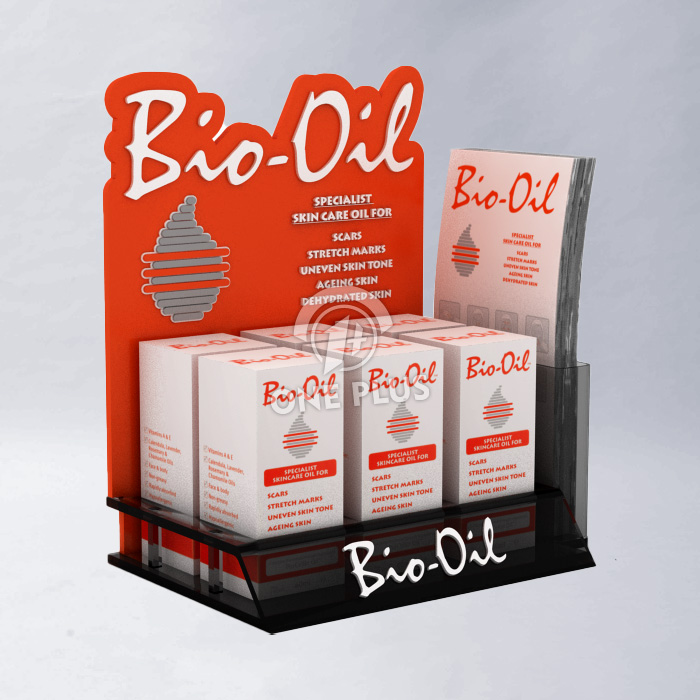
For brands that need a more premium presentation, an acrylic countertop display stand can be a strong complement to this PVC design, especially for high-value items where clarity and perceived quality are priorities.
Customization and Production Workflow
The customization process starts with the product. Before any artwork is finalized, the engineering team needs to know the dimensions and weight of the items that will sit on the display, how many rows are required, and whether the unit will be placed on a counter, shelf, or another surface. These inputs determine the step depth, tier spacing, and material thickness.
From there, the structural design is translated into CNC route paths. This is where adjustments like wider steps or a taller canopy clearance are made. Because the design is digital, changes can be tested and refined before a physical sample is cut. For brands with tight timelines, this reduces the back-and-forth that typically slows down custom POP projects.
Artwork is prepared for the chosen printing method. For full-surface UV digital printing, the graphic file is mapped onto the flat panels so that patterns and colors flow across the assembled unit. A common mistake is designing artwork for a flat sheet without accounting for how it will look once the panels are slotted together. A good production partner will provide a dieline or template that shows exactly where folds, slots, and edges fall.
Once the artwork and structure are approved, production moves to cutting, printing, and finishing. The protective matte overlay is applied after printing to seal the graphics and provide a consistent surface sheen. Each component is then checked for fit before packing. Because the unit ships flat, the final quality check includes a test assembly to confirm that the slots and tabs align correctly. This step is what prevents a store associate from encountering a display that almost fits together but does not quite seat properly.
Three Concrete Use-Case Scenarios
1. Blind Box Series Launch at a Specialty Toy Store
A toy brand is launching a new blind box series with twelve characters. The store has limited counter space near the register. The 3-tier display is configured with three rows of four boxes, each row dedicated to a character group. The canopy header carries the series logo and a “Collect All 12” message. Full-surface printing wraps the sides with character art, so the display itself becomes a piece of merchandising. Customers can see the full assortment at a glance, which increases the likelihood of multiple purchases.
2. Pop-Up Shop for Handmade Crochet Amigurumi
A small-batch maker sells crochet dolls at weekend markets and pop-up events. The products are lightweight but irregular in shape, so they need a display that keeps them upright and separated. The stepped riser provides a natural home for each doll, and the PVC foam board is durable enough to survive repeated transport and setup. Because the unit ships flat and assembles without tools, it fits into a market booth setup that has to be completed in minutes. The waterproof surface means a quick wipe-down is all that is needed between events.
3. Game Store Counter Display for Vinyl Figures and Acrylic Standees
A game store wants to cross-merchandise collectible figures alongside trading card packs and board games. The counter display sits at the register, with the top tier reserved for limited-edition vinyl figures and the lower tiers holding acrylic standees and smaller impulse items. The canopy header displays the store’s loyalty program logo. Because the display is modular in its tier configuration, the store can adjust the step widths to accommodate different product mixes over time without replacing the entire unit.
Assembly, Packing, and Logistics
This display ships as an interlocking flat-pack. The components are nested together to minimize volume, which directly reduces shipping costs, especially for international orders. Flat packing also protects the unit during transit. A fully assembled display is vulnerable to impact damage and takes up far more space in a container or carton. Flat components are less likely to crack, bend, or delaminate.
Assembly on-site is designed to be intuitive. The mortise-and-tenon slots align the panels and hold them securely without glue or specialized tools. In most cases, a single person can assemble the unit in under two minutes. This matters for retail chains where displays may be assembled by store staff who have no prior experience with the fixture. Clear, printed assembly instructions can be included in the carton, and the slot design itself provides visual guidance because the tabs only fit one way.
For brands shipping to multiple regions, the flat-pack format also simplifies customs and warehousing. Cartons can be stacked efficiently, and inventory can be stored in less space. If a display is damaged in transit, individual components can be replaced rather than scrapping the entire unit, which is a practical advantage for long-term retail programs.
Packaging can be customized as well. A printed outer carton with your brand identity reinforces the unboxing experience for store staff and makes it easier to identify the display during receiving. For brands that distribute through distributors or retail partners, this kind of packaging detail reduces the chance of the display being misplaced or discarded.
Frequently Asked Questions
大きなぬいぐるみ用に、ステップの幅やキャノピーの高さを変更できますか?
Yes. The standard configuration is optimized for mini figurines and capsule toys, but the CNC route paths can be adjusted to widen the step depth or increase the header clearance. This allows the same structural concept to accommodate larger plush toys or heavier vinyl collectibles. The engineering team will review the product dimensions and weight to recommend the appropriate modifications.
このディスプレイはどのように発送され、組み立ては難しいですか?
It ships as an interlocking flat-pack to reduce shipping volume and protect the components. The mortise-and-tenon design means the parts slot together securely without glue or special tools. Assembly is typically completed in a few minutes by one person.
What printing methods are available for the graphics?
Full CMYK UV digital printing and silk-screen printing are both available. A protective matte overlay can be applied to reduce glare and improve scuff resistance. The choice depends on the complexity of the artwork and the desired finish.
Can I order a sample before committing to a full production run?
Yes. Sampling is a standard part of the production workflow. A physical sample allows you to verify the structure, print quality, and assembly before proceeding to a larger order. This is especially useful for brands launching a new product line or testing a new retail format.
Start Your Custom Counter Display Project
If you are planning a toy or game retail launch and need a counter display that presents products clearly, carries your branding, and ships efficiently, this 3-tier PVC riser is a strong starting point. Every element, from the step dimensions to the canopy height and the printed artwork, can be customized to fit your assortment.
To move forward, gather the dimensions and approximate weight of the products you plan to display, along with any artwork or brand guidelines you want to use. The team at One Plus Display can review these details and recommend a configuration that balances structure, cost, and visual impact. Whether you need a single sample or a multi-store rollout, the factory-direct process keeps production efficient and communication direct.
Explore the full range of countertop PDQ displays to see how different formats solve different retail challenges. For a lower-cost promotional option, compare this design with a custom corrugated cardboard countertop display stand. If your product line calls for a more premium presentation, review the custom acrylic countertop display stand option. Each format has its own strengths, and the right choice depends on your product, budget, and retail environment.