A Countertop Display That Earns Its Space
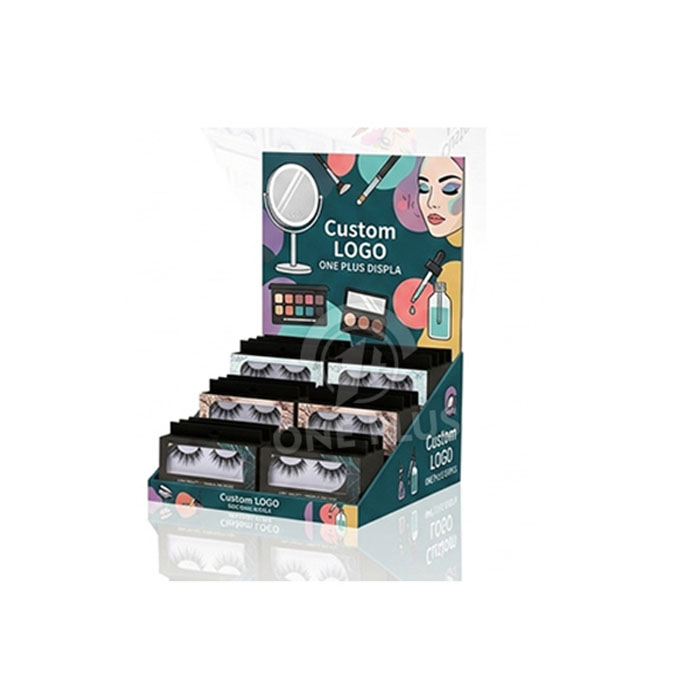
Picture a boutique beauty counter on a Saturday afternoon. A shopper picks up a lash box from the front row, turns it over, then sets it back slightly askew. Behind it, three more rows of product wait in shadow. If those rows are invisible, the sale stops at whatever the customer can reach. That is the problem a well-designed countertop PDQ solves: it turns a flat, cramped surface into a staircase of visible product, each tier stepping back and up so every lash box presents its face to the shopper.
This article walks through a 4-tier custom artistic cardboard countertop PDQ built for eyelash brands selling through boutiques, salons and beauty specialty stores. It covers why the format suits cosmetics, how the structure is engineered to stay stable and square, what material and finish combinations make sense, and how the unit moves from artwork file to retail counter. The goal is practical: help retail buyers and brand managers judge whether this display belongs in their planogram, and understand what to specify before requesting a quote.
One Plus Display manufactures these units factory-direct, which means the dieline, print and tooling decisions are made around your product dimensions rather than shoehorned into a stock box. The result is a display that looks like part of the brand, not a generic tray that happens to hold it.
Why a Graduated Tier Format Wins in Cosmetics
Eyelash packaging is small, light and highly visual. A lash box is often little bigger than a deck of cards, with artwork that does the selling. When those boxes are stacked in a single row or piled in a shallow tray, the front units block the ones behind. A graduated step-up tray solves this through geometry rather than through signage. Each tier rises a controlled amount so the face of every box remains in the shopper’s line of sight from a standing position.
The format also fits the way cosmetics shoppers behave. They browse with their hands. They pick up, compare, put down. A tiered countertop display keeps the assortment organized into rows, which means a returned box lands back where it belongs instead of migrating across the counter. For staff at a salon or boutique, restocking becomes a matter of topping up rows rather than rebuilding a pile.
There is a merchandising argument too. Counter space in a boutique is the most contested real estate in the store. A display that presents four tiers of product in a footprint no larger than a sheet of paper delivers high density per square centimeter. That density is what justifies giving the unit a permanent spot near the register, where impulse purchases actually happen.
Structural and Engineering Decisions
Load Path and Center of Gravity
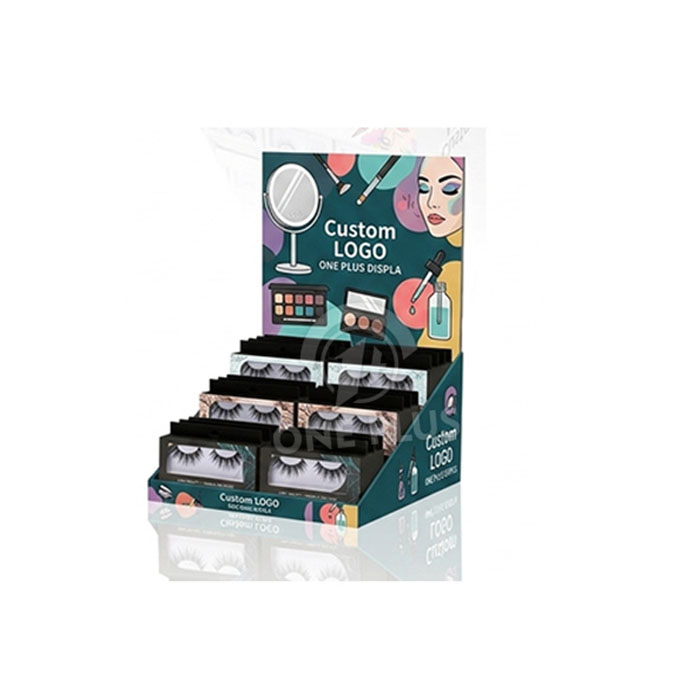
A countertop display is only useful if it stays upright when a customer leans on it or pulls a box from the front edge. The engineering starts with the load path. Each tier shelf sits on a folded platform that transfers weight down through internal supports to the base panel. Because the tiers graduate backward, the heaviest product mass tends to sit low and toward the rear, which keeps the center of gravity inside the footprint even when the front row is empty.
That last point matters more than it sounds. A display that becomes tippy as it sells down is a liability on a retail counter. Designing for the empty-front condition, rather than the fully loaded condition, is what separates a stable unit from one that has to be babysat by staff.
Locking and Squareness
Corrugated displays lose their crisp look when panels rack out of square. This unit uses interlocking tabs and slots at the tier joints so the staircase locks into a rigid geometry once assembled. The base is a double-wall folded section, which resists the side-to-side flex that a single panel would allow. The header panel, if specified, ties the two side walls together and adds torsional stiffness across the top.
Edge Protection and Wear Points
On a busy counter, the front lip of the lowest tier takes the most handling. Where budgets allow, a folded return or a reinforced front edge keeps that lip from delaminating over months of use. The same principle applies to the tier noses, which are the surfaces customers touch when they slide a box out.
Materials and Finishing Options
The standard construction for this countertop PDQ is high-strength B/E-flute corrugated cardboard, which balances print quality against rigidity. B-flute gives a smoother print surface and better crush resistance for a display of this size, while E-flute is thinner and crisper for smaller units or where shelf depth is tight. For heavier assortments or longer service life, a double-wall or reinforced corrugated grade can be specified.
Surface finishing is where an eyelash brand can differentiate. Full CMYK digital or offset printing covers the visible surfaces, and a protective lamination adds scuff resistance at the wear points described above. Matte lamination reads as premium and hides fingerprints; gloss lamination makes color pop under boutique lighting. Spot UV, embossing and foil stamping are available where the artwork calls for them, though these add tooling and lead time.
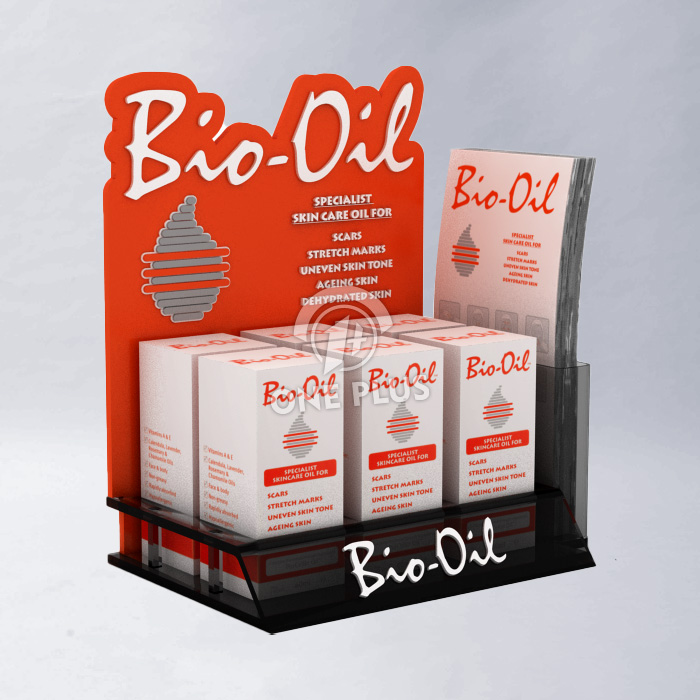
Not every project should be corrugated. PVC foam board offers a stiffer, heavier feel and a clean painted edge, which suits premium counters and longer-term programs. Acrylic brings transparency and a jewelry-case aesthetic, and works well when the lash boxes themselves are visually strong. A hybrid approach is common: corrugated body with acrylic tier inserts, or a PVC foam base with a printed corrugated header. For a comparable acrylic build in a different category, see the custom acrylic countertop display stand for bio-oil, which shows how the same tiered logic translates into clear material.
All dimensions are made to your product. Tier depth, step height and overall footprint are set from the lash box you actually ship, with tolerance for carton variation. Nothing here is a fixed catalog size.
Merchandising and Retail Placement
Where the display sits determines what it needs to do. On a register counter, the unit competes with card readers and receipt printers, so a narrow footprint and a low profile matter. On a salon retail shelf, the display may sit at eye level, which changes the ideal tier angle. In a department store beauty hall, the unit often needs a header to carry brand identity above the surrounding clutter.
Planogram discipline helps here. Four tiers naturally suggest four product groupings: by shade, by lash style, by price tier or by collection. Keeping one SKU per row makes restocking faster and makes out-of-stocks obvious at a glance. If the assortment changes seasonally, a display that ships flat and reassembles without tools can be redeployed rather than discarded.
The header and side panels are prime branding surfaces. A boutique may also want a small price or QR panel integrated into the front edge, which can be designed into the dieline rather than taped on.
Customization and Production Workflow
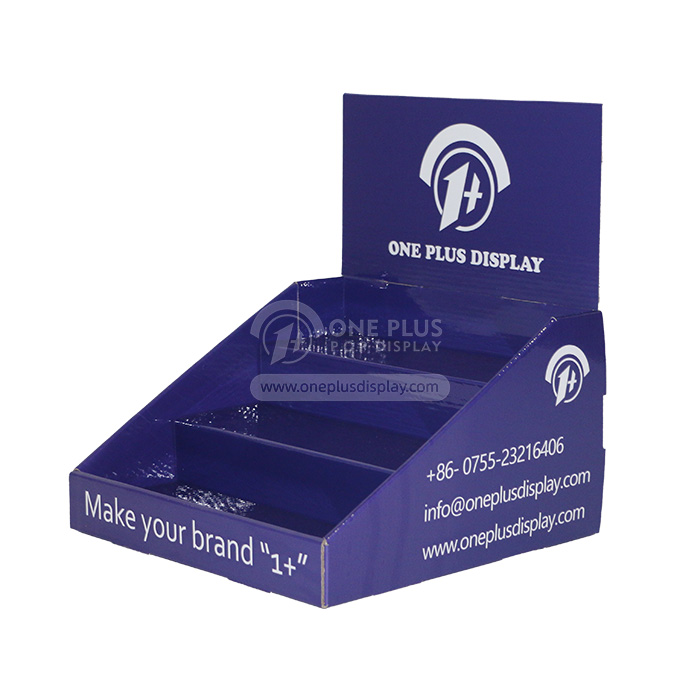
Most projects begin with a product sample or a dimensioned drawing of the lash box. From that, the structural team produces a dieline showing every fold, tab and print surface. The dieline is the contract between design and manufacturing: it defines what the printer will reproduce and what the customer can place artwork onto.
Once the dieline is approved, artwork is applied to a template that maps each visible panel. Because the unit is printed flat before die-cutting, complex illustrations, gradients and photographic imagery reproduce cleanly across the whole surface. Brand logos can be placed on the header, side walls, tier faces and front skirt.
Production then moves through printing, lamination, die-cutting and creasing, followed by a physical sample for fit and stability check. Only after the sample is approved does the run proceed. For brands with tight launch dates, the sample stage is the point to flag any change in product carton size, since late changes can affect tier depth and step geometry.
If your program starts smaller, the custom corrugated cardboard countertop display stand for small product promotions shows how a compact footprint can still carry full brand graphics. Larger assortments can move up to the broader range of countertop PDQ displays built around the same engineering principles.
Three Use-Case Scenarios
Boutique Lash Bar
A single-location lash studio sells its own branded lash trays at the front desk. The counter is narrow, so the display is specified with a shallow footprint and four short tiers. Product is grouped by curl type. Staff restock from a flat-packed carton stored in the back room.
Salon Chain Seasonal Launch
A regional salon group launches a summer lash collection across multiple locations. The display carries a seasonal header and a limited palette. Because units ship flat, the group ships one carton per store and assembles on site without tools, then stores the units flat at the end of the season.
Department Store Beauty Hall
A beauty hall needs a unit that reads as premium next to glass and metal fixtures. Here the specification shifts to PVC foam board with a matte laminate and an acrylic tier insert. The footprint grows slightly to hold a fuller assortment, and the header carries the brand mark above the surrounding counters.
Assembly, Packing and Logistics
The display is designed to ship flat. That reduces carton volume, which lowers freight cost per unit and reduces the corrugated material used in packaging itself. Each unit arrives with the printed panels, tier platforms and any inserts, along with a simple assembly sequence. No tools are required; the tabs and slots are sized for hand assembly.
Assembly at the retail location takes seconds rather than minutes, which matters when a district manager is resetting several stores in a day. The unit can be disassembled and stored flat between programs, which extends its useful life beyond a single season.
For international programs, the flat-pack format also simplifies customs handling because the shipment is classified as printed packaging rather than as assembled furniture. Pallet configuration and carton labeling can be customized to match a retailer’s receiving requirements.
Frequently Asked Questions
Can I use my own artwork on the side panels and header?
Yes. A dieline template is provided so your brand graphics can be applied to every visible surface, including the header, side walls, tier faces and front skirt. Print-ready files are mapped to the template before production.
Is the display stable when the front row is empty?
Yes. The structure is engineered with a balanced center of gravity so it remains stable regardless of how product is distributed across the tiers, including the empty-front condition.
What is the minimum order quantity?
Minimums depend on the material and finishing combination. Corrugated units generally have lower minimums than acrylic or PVC foam builds. Share your target quantity and the team will confirm what is practical for your specification.
How long does sampling and production take?
Lead time depends on whether a new dieline is required, the print method and the finishing. A physical sample is produced before the run so fit, print and stability can be verified. Your account contact will confirm a schedule against your launch date.
Next Step
If you are planning a lash or cosmetics countertop program, the fastest way to a firm quote is to send the product dimensions, target quantity and any brand artwork you already have. The structural team will return a dieline and a specification proposal built around your actual product, not a stock size. Reach out through the contact form to start the conversation.