















Inhaltsverzeichnis
Projekt Hintergrund: Kleiner Raum, großes Inventar
Kleine Spielzeughändler stehen oft vor einem Dilemma: Sie haben Hunderte kleiner SKUs (wie blisterverpackte Actionfiguren oder Kreisel), aber sehr begrenzten Verkaufsraum. Unser Kunde, eine wachsende Spielzeugmarke, benötigte eine Lösung, die die Produktdichte maximierte, ohne den Laden zu überladen.
Sie forderten speziell ein Karton-Haken-Display das Produkte auf beiden Seiten halten konnte. Sie hatten jedoch einen einzigartigen Schwachpunkt: Ladenbesitzer mussten das Display häufig bewegen, um die Böden zu reinigen oder die Ladenanordnung neu zu gestalten.
Die Herausforderung: Das “Ziehen und Beschädigen”-Problem
Standard-Karton-Displays sind stationär. Wenn ein Ladenmitarbeiter versucht, ein voll beladenes Display über den Boden zu ziehen, reißt oft die Papierbasis, oder die Feuchtigkeit vom Wischen beschädigt den Boden.
Der Kunde fragte: “Können Sie ein Karton-Display herstellen, das wie ein Metallregal rollt, aber wie Karton kostet?”
Unsere Lösung: Rollfähigkeit & doppelseitige Effizienz
One Plus Display entwickelte eine Hybridlösung, die die Kosteneffizienz von Wellpappe mit der Nützlichkeit permanenter Einrichtungsgegenstände kombiniert.
1. Verstärkte mobile Basis (Lenkrollen)
Wir haben eine verstärkte interne Struktur für die Basis entworfen, um die Installation von zu unterstützen 4 universal caster wheels. This allows the display to glide effortlessly across the retail floor, even when fully stocked with toys.
2. Double-Sided Pegboard Design
To double the inventory capacity, we utilized a two-sided structure. Equipped with durable plastic hooks, this design allows the retailer to showcase different product series on the front and back, maximizing sales per square foot.
Montageanleitung: Integration von Rädern in Karton
Adding wheels to a cardboard display requires precision. Below is the step-by-step assembly process showing how we ensure stability.
Phase 1: Flat-Pack Efficiency
Despite the complex features, the unit ships completely flat to save on logistics costs.
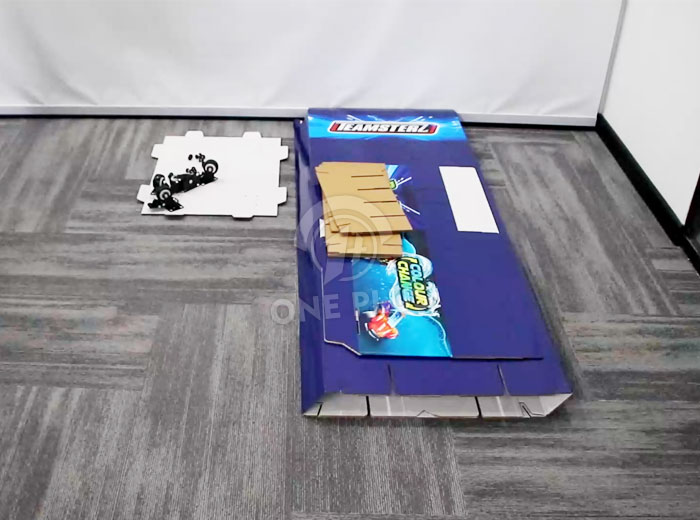
1. The kit arrives flat, including the display body, base inserts, and wheels.
Phase 2: Building the Reinforced Base
The secret to a rolling display is a strong core. We use high-strength internal dividers to hold the weight.
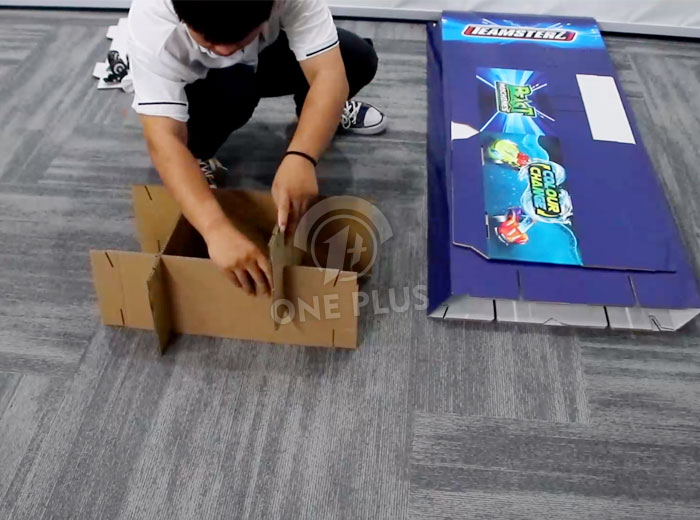
2. Assembling the internal cross-structure support.
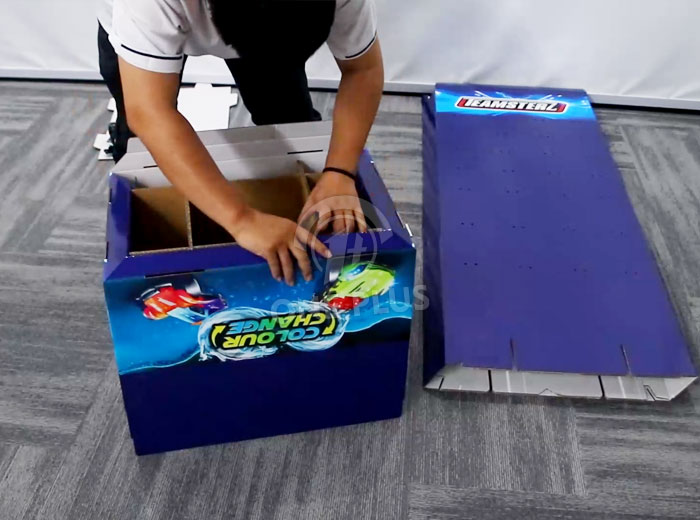
3. Inserting the support into the branded base cover.
Phase 3: Connecting the Body
The main double-sided body slides securely into the prepared base.
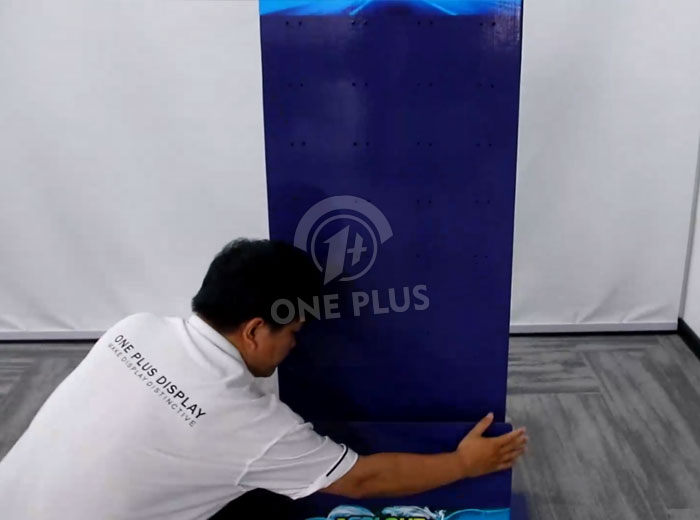
4. Locking the main pegboard body into the reinforced base.
Phase 4: Adding Mobility
Finally, the caster wheels are attached to the bottom, turning a static stand into a mobile sales unit.
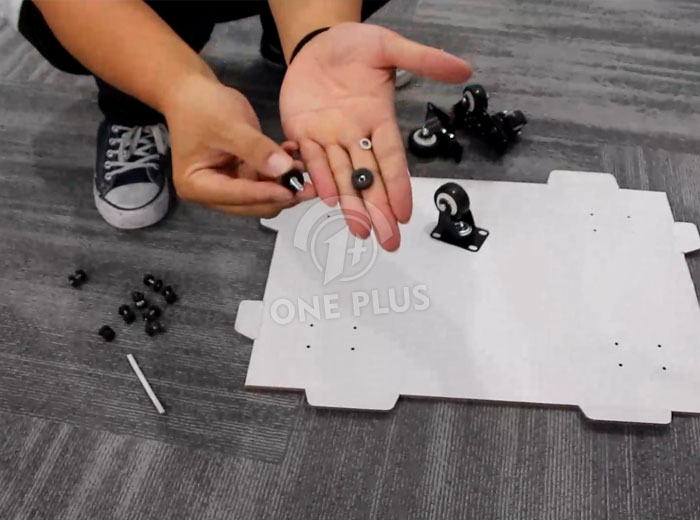
5. Installing the 4 caster wheels for 360-degree movement.
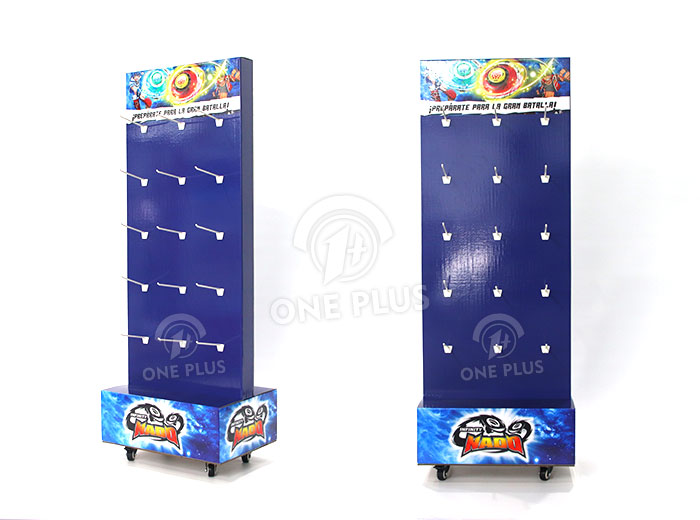
6. Ready for Retail: The finished mobile display populated with products.
Das Ergebnis: Flexibilität steigert den Umsatz
The client reported excellent feedback from their retail partners:
- Store Preference: Retailers prioritized placing this display in high-traffic areas because it was easy to move aside during cleaning hours.
- Increased Capacity: The double-sided hook design allowed the brand to display 50+ SKUs in a footprint of less than 2 square feet.
Holen Sie sich Ihre mobile Display-Lösung
Need a display that moves with your customer flow? One Plus Display can integrate wheels, handles, and other functional accessories into your cardboard fixtures.